
In short
The essentials in Fort Kochi are the Chinese fishing nets at dawn or sunset, St. Francis Church, the Paradesi Synagogue and Mattancherry Palace, and a Kathakali performance in the evening. Give it two days. And plan around one fact: Mattancherry Palace is closed on Fridays, and the synagogue on Fridays and Saturdays — so see Mattancherry between Sunday and Thursday.
Most lists of things to do in Fort Kochi are written by people who spent a weekend here. This one is written from a few streets away from the fishing nets, by someone who has watched visitors arrive every season for fifteen years — and watched a good number of them walk up to a locked synagogue on a Saturday.
So this guide does something the listicles do not: it arranges the town by the hour, because Fort Kochi is a place with a rhythm. Mornings are cool and belong to the waterfront. Middays are hot and belong to indoors and shade. Evenings belong to the sunset, the theatre and the food. If you want the yoga side of things specifically — class times, prices and what a traditional class is like — that is in our separate guide to practising yoga in Fort Kochi.
- How long to stay
- 2 days; 3 to slow down
- Best weather
- November – February
- Closed Fridays
- Mattancherry Palace, Synagogue
- Also closed Saturdays
- Paradesi Synagogue
- From Ernakulam
- Water Metro, about 20 minutes
- Getting around
- On foot, plus auto-rickshaw
First, the Friday mistake
This single piece of planning will improve your trip more than anything else on this page.
Two of the most important sights are in Mattancherry, next to each other, and their closing days overlap. Mattancherry Palace is closed on Fridays. The Paradesi Synagogue is closed on Fridays, Saturdays and Jewish holidays. That leaves Sunday to Thursday as the only days you can see both — and every week, visitors arrive on a Friday or Saturday without knowing.
| Day | Mattancherry Palace | Paradesi Synagogue |
|---|---|---|
| Sun – Thu | Open | Open |
| Friday | Closed | Closed |
| Saturday | Open | Closed |
| Jewish holidays | Open | Closed |
If Friday is your only day, do not despair: spend it in Fort Kochi proper, where the churches, the waterfront and the heritage streets are all open, and save Mattancherry for another trip. Opening hours in India do change, so treat any timing here — including ours — as something to confirm on the day.
Mornings: the waterfront at first light
Watch the Chinese fishing nets being worked
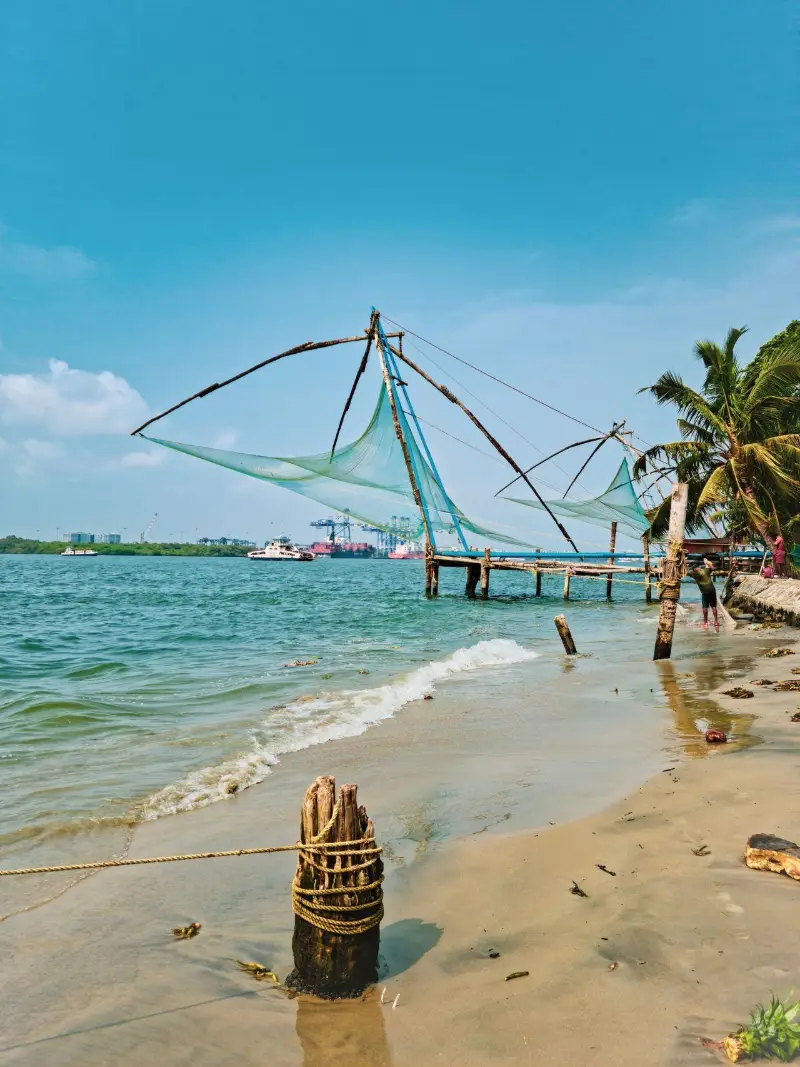
The great cantilevered nets along the shore are the image of Fort Kochi, and they are still used. Their origin is debated — they are usually credited to traders from China, though some historians point to the Portuguese — but what matters to a visitor is that they are best seen early, when the fishermen are working them and the light is soft. Go around sunrise, before the heat and the crowds.
By sunset the waterfront fills with families and walkers, which is a different pleasure. Near the nets you will find stalls selling the day's catch; the old custom is that you choose a fish and a nearby place cooks it for you. Agree the price for both before anything goes on the fire.
Start the day on a mat
An honest mention, since you are reading this on a yoga school's website: one of the better ways to begin a day here is a traditional two-hour Hatha Yoga class in a garden pavilion. Our morning class runs 7:30 to 9:30 am and costs ₹500 (normally ₹600), with no booking and no experience needed — mats are provided. Because the morning venue sometimes moves to an open garden nearby, send us a message the evening before.
If yoga is not your thing, a slow walk along the waterfront towards the beach does much of the same work.
Walk the heritage streets before it gets hot
Fort Kochi's core is a grid of quiet streets lined with Portuguese, Dutch and British-era buildings, many now guesthouses, galleries and cafés. Princess Street is the best known. Walking it in the morning, before 10 am, is a completely different experience from walking it at 1 pm.
The historic core of Fort Kochi
St. Francis Church
Often described as the oldest European church in India, St. Francis Church is quietly significant. Vasco da Gama died in Kochi in 1524 and was buried here; his remains were taken back to Portugal around fourteen years later, but the original gravestone still marks the spot inside. It is a working church, so dress modestly and keep quiet during services.
Santa Cruz Cathedral Basilica
A short walk away, and a striking contrast: where St. Francis is plain, Santa Cruz is ornate, with painted ceilings and a bright interior. The two together tell a good part of the town's colonial story.
Vasco da Gama Square and the promenade
The open waterfront beside the fishing nets, shaded by large rain trees. It is where Fort Kochi comes to sit in the evening, and a good place to rest between sights at any time.
Mattancherry and Jew Town
Mattancherry sits a short auto-rickshaw ride from central Fort Kochi. Go between Sunday and Thursday, ideally in the late morning, and give it half a day.
Mattancherry Palace (the Dutch Palace)
Built by the Portuguese and later renovated by the Dutch — hence the name — the palace is modest from outside and remarkable within, for its Kerala murals depicting scenes from the Ramayana and other Hindu stories. It is generally open 10 am to 5 pm and closed on Fridays. There is a small entry fee, higher for foreign visitors, and photography is restricted in the mural galleries.
The Paradesi Synagogue
Built in 1568, the Paradesi Synagogue is described as the oldest active synagogue in the Commonwealth. The interior — hand-painted floor tiles and glass chandeliers — is small and beautiful. It generally opens 10 am to 12 noon and 2 to 5 pm, and is closed on Fridays, Saturdays and Jewish holidays. Note the lunchtime closure, and dress modestly: shoulders and knees covered.
The lanes of Jew Town
The streets leading to the synagogue are lined with antique shops, spice warehouses and small cafés. The old spice trade is the reason this whole coast was fought over for centuries, and you can still smell it here. Browse freely; bargain politely.
Middays: shade, food and slowing down
Between roughly noon and 3 pm, the heat makes sightseeing hard work for most of the year. Kerala's own answer is a long lunch and a rest, and it is a good one.
- Eat a Kerala meal. Breakfast staples like appam, puttu and dosa are worth seeking out, and a vegetarian meal served on a banana leaf is a proper introduction to the cuisine.
- Sit in a café. Fort Kochi's art cafés, some long-running like Kashi Art Café, are designed for exactly this hour.
- See a gallery. The town has a strong contemporary art scene, a legacy of the Biennale.
Evenings: sunset, Kathakali and Kalaripayattu
Sunset at the fishing nets or the beach
The nets silhouetted at sunset are the other classic Fort Kochi view. The beach itself is for walking and watching the light rather than swimming.
A Kathakali performance
Kathakali is Kerala's classical dance-drama: elaborate costumes, painted faces, and stories told through precise expressions and gesture. Performances for visitors in Fort Kochi typically begin with the make-up session around 5 pm, followed by the performance around 6 to 7 pm. Arrive for the make-up — watching the faces being painted is half of the experience. Schedules shift by season and venue, so check the day's timing when you buy tickets.
Kalaripayattu
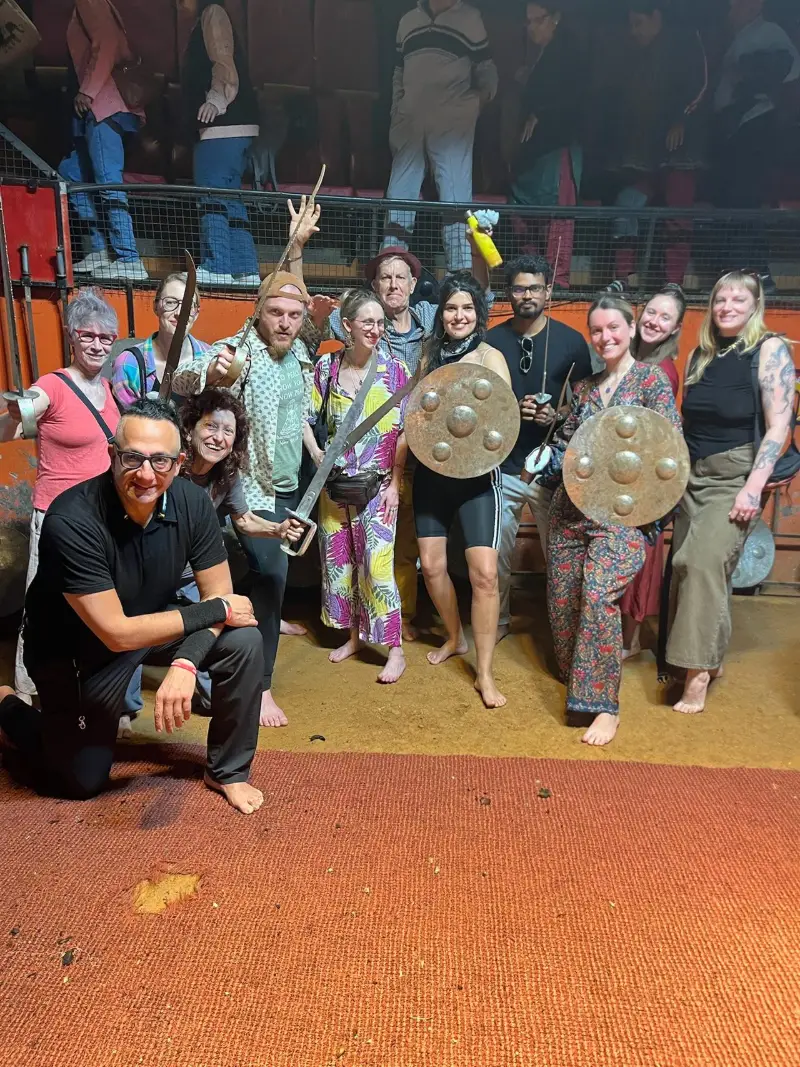
Kerala's traditional martial art is often performed at the same cultural centres. It is athletic, fast, and — for anyone who practises yoga — fascinating to watch, since it shares a long history with Kerala's other body traditions.
Getting here and getting around
| Route | Best option | Notes |
|---|---|---|
| Ernakulam → Fort Kochi | Kochi Water Metro from High Court | About 20 minutes, against 35–40 by road. Fares from around ₹20. Also the most pleasant way to arrive. |
| Ernakulam → Mattancherry | Water Metro via Willingdon Island | The High Court–Willingdon Island–Mattancherry line opened in October 2025. |
| Cochin Airport → Fort Kochi | Taxi | Around 1 hour 15 minutes, depending on traffic. |
| Within Fort Kochi | On foot | The historic core is compact. Walk early or late. |
| Fort Kochi ↔ Mattancherry | Auto-rickshaw or bicycle | Agree the fare before setting off. |
When to come
November to February is the most comfortable time, dry and around 30 °C, and the busiest. March to May is hot. June to September is the monsoon: humid and wet, but green, quiet and cheaper, and traditionally the season for Ayurvedic treatment.
The Kochi-Muziris Biennale, India's largest contemporary art exhibition, takes over Fort Kochi's warehouses and heritage buildings every two years. The next, the seventh edition, is due to open in December 2027. If your dates are flexible, it is worth planning around.
A one-day and two-day plan
| Time | One day | Two days |
|---|---|---|
| Early morning | Fishing nets at sunrise | Day 1: fishing nets at sunrise · Day 2: morning yoga class, 7:30 am |
| Morning | St. Francis Church, Santa Cruz, heritage streets | Day 1: churches and heritage streets · Day 2: Mattancherry Palace |
| Late morning | Mattancherry Palace and Synagogue (before noon) | Day 2: Paradesi Synagogue and Jew Town |
| Midday | Long Kerala lunch, rest | Long lunch, café, gallery |
| Late afternoon | Jew Town lanes | Day 1: Princess Street · Day 2: spice warehouses |
| Evening | Kathakali make-up and performance | Day 1: sunset at the nets · Day 2: Kathakali |
Start a morning in Fort Kochi with us
Traditional Hatha Yoga, 7:30–9:30 am or 3:30–5:30 pm, ₹500 a class (normally ₹600). No booking, no experience needed. Message us the evening before a morning class.
Planning the rest of Kerala? A seven-day itinerary from Fort Kochi takes in Munnar and the backwaters, and where to stay in Fort Kochi compares the neighbourhoods. For an evening, Kathakali in Fort Kochi explains what you are watching, and kalaripayattu is the other thing worth seeing after dark. Caught by the weather? Here is what to do in Fort Kochi when it rains. And for the two most famous sights, see the Chinese fishing nets and what Fort Kochi Beach is really like.
Common questions
How many days do you need in Fort Kochi?
Two full days covers Fort Kochi and Mattancherry comfortably, including Kathakali and a sunset at the nets. One day works if you start early; three lets you slow down.
What is closed on Fridays?
Mattancherry Palace, and the Paradesi Synagogue, which is also closed on Saturdays and Jewish holidays. See Mattancherry between Sunday and Thursday.
What time is the Paradesi Synagogue open?
Generally 10 am to 12 noon and 2 to 5 pm, closed Fridays, Saturdays and Jewish holidays. Confirm on the day, as timings can change.
How do you get from Ernakulam to Fort Kochi?
The Kochi Water Metro from High Court takes about 20 minutes, against 35–40 by road, with fares from around ₹20.
When is the best time to visit?
November to February for weather. The next Kochi-Muziris Biennale opens in December 2027. Monsoon, June to September, is wet but green, quiet and cheaper.
Is Fort Kochi walkable?
Yes — the historic core is compact. Mattancherry is a short auto-rickshaw ride away. Walk in the early morning or late afternoon.

Known to his students as Achu, Aksharanand has taught Hatha Yoga, pranayama, meditation and Vedanta philosophy in Fort Kochi for over fifteen years, and has shown the town to students from more than seventy international teacher training batches.