
In short
Fort Kochi Beach is a place to walk, not to swim. The sand is narrow, the water is close to a busy port, and swimming is not advised. Go at sunrise for quiet and cool air, or at sunset for the town’s evening promenade. If you want to swim, Cherai Beach on Vypin island, about 25 km north, is the usual choice.
Visitors arrive in Fort Kochi expecting a Kerala beach from a postcard: wide sand, palm trees, clear water. What they find is something different, and a good number of them are disappointed for about ten minutes before they understand what the place is for.
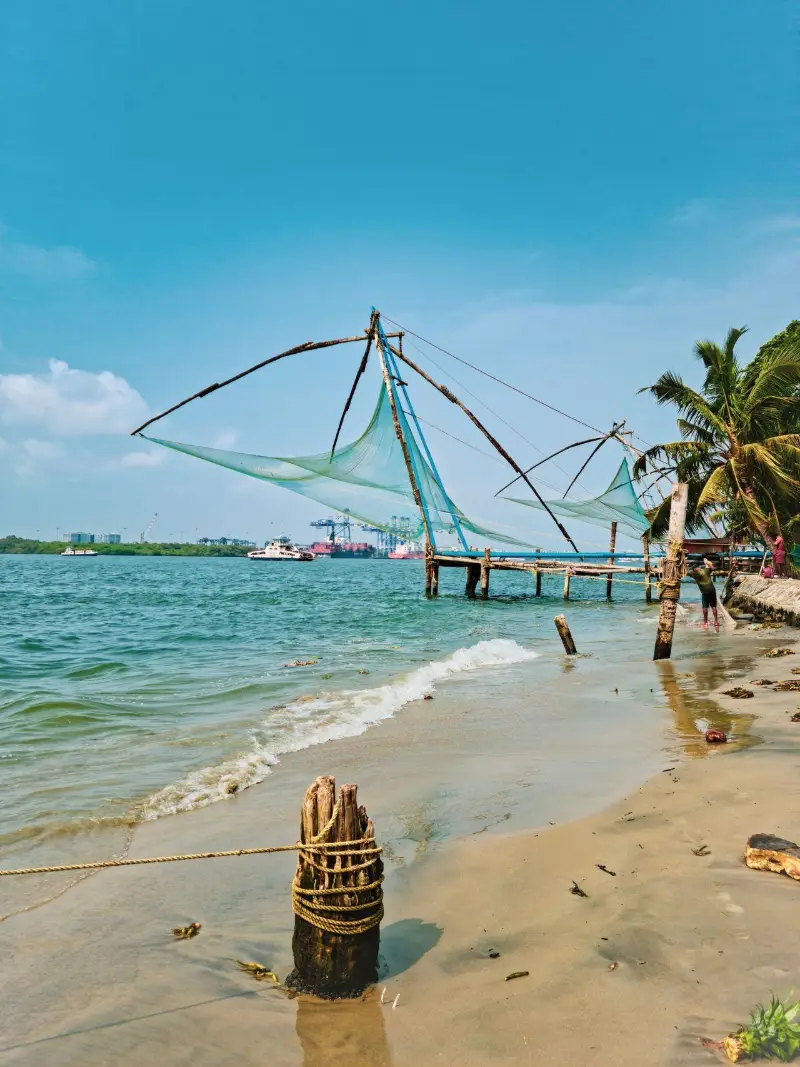
Fort Kochi Beach is not a resort beach. It is the town’s seafront: a narrow band of sand where the Arabian Sea meets the mouth of one of India’s busiest harbours, backed by a walkway and old rain trees. Nobody local comes here to swim. They come to walk, to sit, to eat something from a cart, and to watch the sun go down. Once you arrive with that in mind, it becomes one of the pleasures of staying here.
Can you swim at Fort Kochi Beach?
No, and please do not try. There are three reasons.
- The port. Kochi is a working harbour, and the channel for large ships runs just off this stretch of coast. Water quality near a port is not what you want to be swimming in.
- Currents. The meeting of the harbour mouth and the open sea makes the water unpredictable, especially in the monsoon.
- Erosion. The sea has eaten into the beach over the years. In places the sand is only a few metres wide, and parts of the shore are lined with stones.
Lifeguards are posted at the main stretch, and you will see signs and whistles if anyone wades in too far. Paddling at the edge is common. Swimming is not.
When to go
At sunrise
Early morning is the beach at its best. The air is cool, the light is soft, and the walkway belongs to walkers, a few joggers and the fishermen starting work on the nets. Between about 6 and 7 am, you will have long stretches almost to yourself.
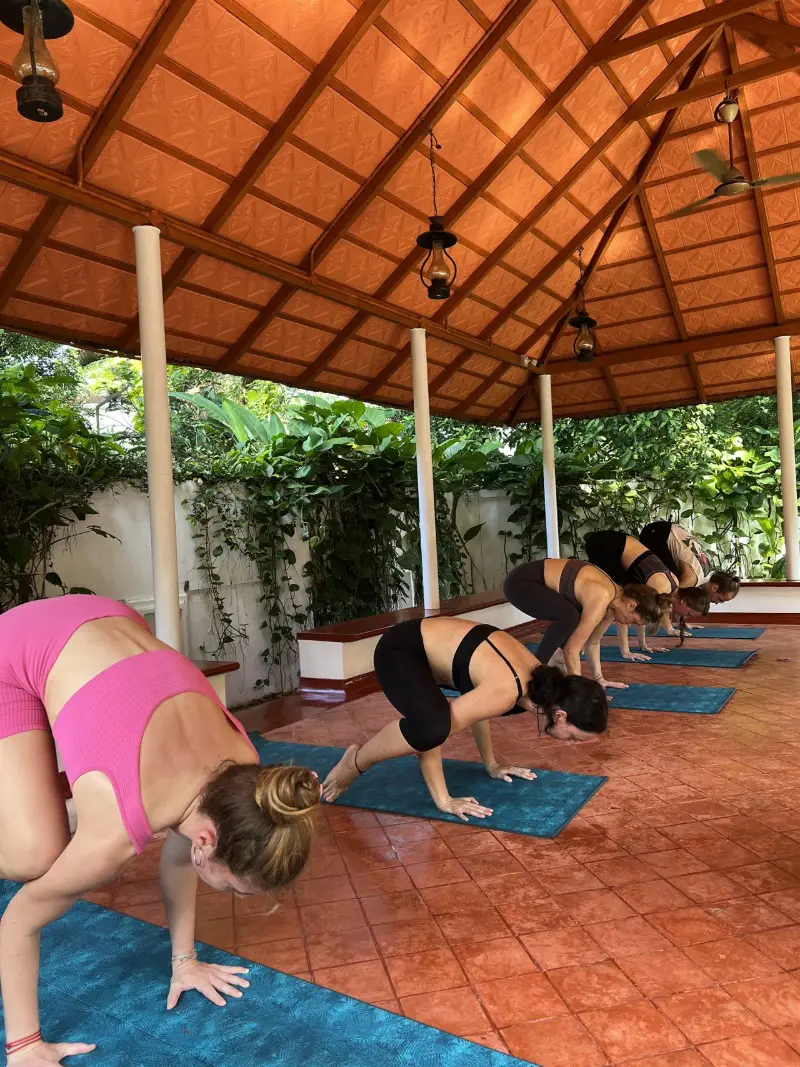
It is also a good hour to arrive at a morning yoga class with a clear head. Our class begins at 7:30 am in Chirattapalam, about twenty minutes’ walk inland, and a slow walk along the sea is as good a warm-up as any.
At sunset
From about 5:30 pm the whole town seems to come out. Families, couples, groups of students and visitors fill the walkway, children fly kites, and carts sell ice cream, roasted peanuts, cut mango with chilli and fried snacks. The sun drops into the sea behind the fishing nets and ships waiting to enter the harbour. It is crowded and noisy and very sociable.
If you practise with us in the afternoon, the 3:30 class finishes at 5:30, which leaves you just enough time to walk down and catch the light.
Times to avoid
Midday for most of the year, when the sand and the stones are too hot and there is little shade. Sunday and holiday evenings are the busiest of all; wonderful if you like a crowd, less so if you wanted a quiet walk.
What you will find there
The walkway
A paved path runs along the seafront, shaded in parts by large rain trees, with benches along the way. It links the beach with Vasco da Gama Square and the Chinese fishing nets at the northern end, so you can walk the whole front in half an hour at an easy pace.
The Chinese fishing nets
The great cantilevered nets stand at the northern end, where the beach meets the harbour mouth. They are still worked, and watching a crew raise one is a highlight of any visit. We have written a separate guide to the Chinese fishing nets, including how to buy fish from them fairly.
Food carts and fish stalls
Near the nets, stalls sell the day’s catch, and small restaurants nearby will cook what you choose. Along the walkway, carts sell simple snacks. Eat from the busiest ones, and agree any price before anything is cooked.
The old town behind it
A few minutes inland are the Dutch Cemetery (usually locked, but visible through the gate), St. Francis Church, and the heritage streets around Princess Street. The beach makes a natural start or end to a walk through them.
Where to swim instead
If a swim in the sea is part of your plan, these are the options people from Fort Kochi actually use.
| Beach | Distance | Notes |
|---|---|---|
| Cherai Beach | About 25 km north, on Vypin island | The nearest proper swimming beach. Take the short vehicle ferry from Fort Kochi to Vypin, then a bus or taxi up the island. Allow about an hour each way. Watch the flags; currents change with the season. |
| Marari Beach | About 1 to 1.5 hours south | A quieter, resort-lined beach near Alappuzha. Better as an overnight stay than a day trip. |
| Varkala and Kovalam | Several hours south | Kerala’s best-known beach towns. A separate trip, not an outing from Fort Kochi. |
From June to September, the monsoon makes the whole Kerala coast rough. Swimming anywhere in the sea during those months is a bad idea.
Practical tips
- Dress: the beach is a family place, not a sunbathing beach. Light clothes that cover the shoulders and knees are the norm. Swimwear on its own will draw attention.
- Shoes: sandals. Parts of the shore are stony.
- Sun: there is shade under the trees on the walkway, very little on the sand.
- Litter: the beach is cleaned, but not always well. It is at its cleanest early in the morning.
- After dark: the lit walkway stays busy well into the evening. The unlit stretches beyond it are best left for daylight.
Walk the beach, then come to class
Traditional Hatha Yoga every day, 7:30–9:30 am or 3:30–5:30 pm. ₹500 a class (a limited-time offer; normally ₹600, and ₹700 from November 2026). No booking and no experience needed; mats provided. Message us the evening before a morning class.
Making a day of it? Things to do in Fort Kochi arranges the whole town by the time of day, and a slow morning in Fort Kochi takes you from the mat to the fishing nets hour by hour.
Common questions
Is Fort Kochi Beach good for swimming?
No. The beach is next to a busy harbour mouth, the currents are unpredictable and parts of the shore have eroded. Walking and paddling at the edge are fine; swimming is not advised. Cherai Beach, about 25 km north on Vypin island, is the nearest good swimming beach.
What is the best time to visit Fort Kochi Beach?
Sunrise, between about 6 and 7 am, for quiet and cool air; or from about 5:30 pm until dusk for the sunset and the evening crowd. Midday is hot, with little shade on the sand.
Is there an entry fee for Fort Kochi Beach?
No. The beach and the seafront walkway are free and open all day.
How far is Fort Kochi Beach from Santhi School of Yoga?
About a twenty-minute walk or a five-minute auto-rickshaw ride. The school is in Chirattapalam, inland from the waterfront, and auto drivers know it.
What should I wear to Fort Kochi Beach?
Light clothes that cover the shoulders and knees, and sandals. It is a family seafront rather than a sunbathing beach, and swimwear on its own will draw attention.

Known to his students as Achu, Aksharanand trained in the Sivananda tradition and holds an Advanced Teacher Training Certificate. He has taught Hatha Yoga, pranayama, meditation and Vedanta philosophy in Fort Kochi for over fifteen years, across more than 5,000 group classes and seventy international teacher training batches.
More about Achu and the school · Book a class or ask a question