
In short
A good slow morning in Fort Kochi: the 7:30 yoga class in Chirattapalam before the heat, a proper Kerala breakfast around 9:30, the Chinese fishing nets at about 10:30, the old lanes until midday, then a rice meal and a genuine rest through the hottest hours. The afternoon class at 3:30 and sunset at the waterfront close it.
Fort Kochi rewards people who move slowly. It is a small, flat peninsula at the mouth of one of the oldest working harbours on the Malabar coast, and nearly everything worth seeing can be reached on foot — if you let it take the morning.
This is how we would spend one.
7:30 — Practise first
Start before the town does. The morning class at the shala in Chirattapalam begins at 7:30, while the lanes are still being swept and the heat has not yet arrived. Two hours of breath, posture and a long relaxation is a strange but excellent way to meet a new place: you step out afterwards with your senses turned up. There is a walk through the whole session in inside a two-hour Hatha class.
Some mornings the class moves to Secret Garden in Fort Kochi. Send us a WhatsApp message the evening before and we will tell you where.
9:30 — Breakfast, properly
Resist the urge to rush. Kerala breakfasts are worth sitting down for: soft appam with vegetable stew, puttu steamed in a tube with banana and coconut, idli and sambar, dosa with coconut chutney. Many small cafés and homestays serve some version of these — ask for whatever the kitchen made that morning. Finish with a small glass of sweet chai or strong Kerala coffee.
10:30 — The fishing nets
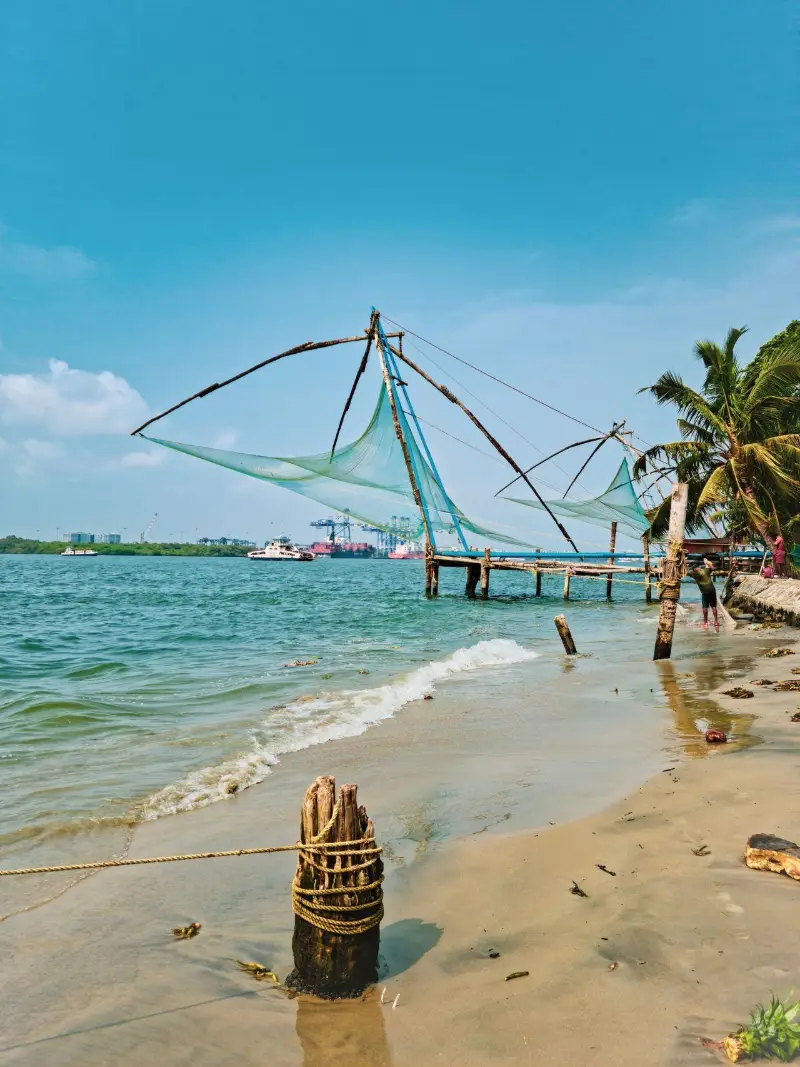
Walk to the waterfront and the cantilevered Chinese fishing nets — the huge wooden and bamboo structures that have become the symbol of the town. Teams of fishermen raise and lower them using counterweights of stones on ropes; watch a full cycle and you will understand the rhythm immediately.
Stay a while. The fish landed are often sold on the spot, and small stalls nearby will cook your choice. The view across the harbour mouth — ferries, fishing boats, the occasional container ship sliding past — is one of the best in the city.
11:15 — The old lanes
Turn inland and wander. Fort Kochi’s lanes are lined with lime-washed walls, tiled roofs, carved wooden shutters and heavy old doors, a quiet record of the Portuguese, Dutch and British periods layered over a much older Malayali town. Rain trees shade the larger streets. Look up; look through gates.
You will pass churches, small galleries, bookshops and cafés. If the Kochi-Muziris Biennale is running, contemporary art spills into warehouses and old godowns across the town. There is more in things to do in Fort Kochi.
12:30 — Lunch, then nothing
Eat a Kerala meal: rice with small curries, thoran, a little pickle, often on a banana leaf. Then do the most local thing of all during the hottest part of the day — nothing. Read, nap, sit under a fan. The afternoon light is harsh; the evening is kinder.
3:30 — The second practice
If you have the energy, come back for the afternoon class. It is the slower practice of the day, as the heat breaks and the sea breeze picks up — and after a full morning on foot, the relaxation at the end is spectacular.
Then walk back to the water as the light goes. The fishing nets turn into silhouettes, families gather along the promenade, and the day ends the way it began: slowly.
A few practical notes
- Carry water and a hat. Even the gentle morning sun is strong.
- Dress modestly for churches and older neighbourhoods; cotton that covers shoulders and knees is comfortable and respectful.
- Use the ferry. Crossing the harbour to Ernakulam or Vypin by public ferry is cheap, cooling and beautiful.
- Stay at least three nights. Fort Kochi is not a place to tick off in an afternoon.
If you are planning a longer stay built around practice, the daily classes are 30% off from a week, and a few days of practice is enough to take a sequence home with you. A week of yoga in Fort Kochi sets out how to plan it.
For the evening, Kathakali in Fort Kochi explains how to watch the make-up and follow the story.
Common questions
What is the best time to see the Chinese fishing nets in Fort Kochi?
Early morning and late afternoon, when the fishermen are working the nets and the light over the water is soft. Midday is hot and the nets are often idle.
Is Fort Kochi walkable?
Very. The old town is compact and flat, and most of what visitors come for — the waterfront, the fishing nets, the lanes of old houses, cafés and churches — is within a comfortable walk.
Can I do a yoga class and still see Fort Kochi in one day?
Easily. The morning class finishes at 9:30, which leaves the whole cool part of the day for the waterfront and the lanes, and the afternoon free before the 3:30 class.
How many days should I spend in Fort Kochi?
At least three nights. A day is enough to see the fishing nets and the main lanes, but the town is better at a slow pace, and a week lets you build a daily practice into it.

Known to his students as Achu, Aksharanand trained in the Sivananda tradition and holds an Advanced Teacher Training Certificate. He has taught Hatha Yoga, pranayama, meditation and Vedanta philosophy in Fort Kochi for over fifteen years, across more than 5,000 group classes and seventy international teacher training batches.
More about Achu and the school · Book a class or ask a question