
In short
Kathakali is a classical dance-drama from Kerala in which actors in elaborate costume and painted make-up tell stories from the Mahabharata and Ramayana through hand gestures, facial expression and movement, to drums and sung verse. In Fort Kochi, short performances for visitors are held most evenings. Arrive about an hour early to watch the make-up being applied, which many people enjoy as much as the show. A performance for visitors usually lasts about an hour.
Most people go to Kathakali expecting a dance and come away having seen something closer to opera, mime and theatre at once, performed by people who have trained for it since childhood.
What Kathakali is
Kathakali — katha, story, and kali, play — developed in Kerala around the seventeenth century. Its stories come mostly from the Mahabharata, the Ramayana and the Puranas: gods and demons, heroes and villains, love, rage and battle.
The actors do not speak. Singers at the side of the stage sing the text, drummers on the chenda and maddalam drive the rhythm, and the actors tell the story with their hands, faces and bodies. Traditionally a performance ran all night in a temple courtyard. The shows for visitors are shorter versions of one or two scenes.
Watch the make-up
The single best piece of advice: arrive early. The actors apply their make-up in view of the audience before the show, and it is extraordinary to watch a face being built, layer by layer, into a character.
The white ridge that frames the jaw, the chutti, is traditionally made from rice paste and paper and built up slowly. At the end, many actors put a seed in the eye to redden the whites, which is why Kathakali eyes look so striking under stage light.
What the colours mean
The make-up is a code, and once you know a little of it the characters announce themselves the moment they walk on.
- Pacha (green) — noble, heroic, virtuous figures: kings, gods, heroes.
- Kathi (knife) — green, with red marks shaped like a knife: proud, arrogant characters with a streak of villainy.
- Thadi (beard) — red beard for fierce, evil characters; white beard for superhuman beings; black for hunters and forest dwellers.
- Kari (black) — demonesses and wild, dark characters.
- Minukku (radiant) — a soft, warm tone for women, sages and gentle figures.
The hands and the eyes
Kathakali has a complete language of hand gestures. The basic hand positions are combined to express hundreds of words — objects, animals, actions, even grammar — so the actor is quite literally speaking with the hands. If you have come across mudras in yoga, these are their theatrical cousins.
The face does the rest. Actors train for years in precise control of the eyes, eyebrows, cheeks and lips to show the nine classical emotions — love, laughter, compassion, anger, courage, fear, disgust, wonder and peace. Watch the eyes: they often tell you what is happening before anything else does.
Where to see it
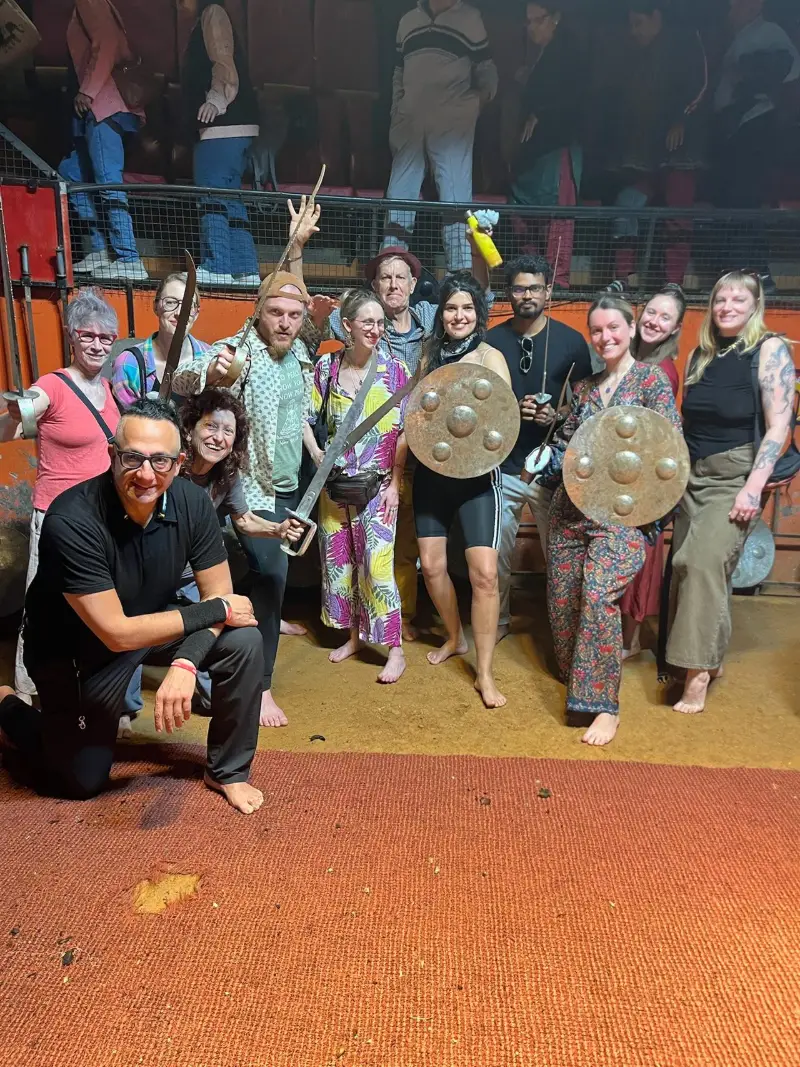
Several places in Fort Kochi and Mattancherry stage short performances for visitors most evenings. The best-known is the Kerala Kathakali Centre on K.B. Jacob Road, near Santa Cruz Basilica, where the make-up usually begins around 5 pm and the performance follows at around 6 pm. It is often followed by a demonstration of Kalaripayattu, Kerala’s traditional martial art.
Timings do change, so check on the day or ask wherever you are staying. Performances for visitors typically last about an hour and usually include a short explanation of the story and gestures in English.
Getting the most from it
- Arrive for the make-up, an hour before the show.
- Sit near the front. So much happens in the eyes that distance costs you a lot.
- Read the story first. Most venues hand out or display a short synopsis. Knowing who is who makes it far easier to follow.
- Let the drums carry you. Even without following every gesture, the rhythm and intensity are compelling.
- Ask before photographing the make-up process up close.
It fits neatly into a day in Fort Kochi: take the morning yoga class and you have the whole afternoon free to arrive early for the make-up. There is more to fill the rest of your time in things to do in Fort Kochi and a slow morning in Fort Kochi.
Common questions
What time is the Kathakali show in Fort Kochi?
Performances for visitors are held most evenings. At the Kerala Kathakali Centre the make-up usually starts around 5 pm and the performance around 6 pm, but timings change, so check on the day.
How long is a Kathakali show?
Performances for visitors usually last about an hour, plus an hour beforehand if you watch the make-up. Traditional temple performances can run all night.
Do I need to understand the story to enjoy Kathakali?
It helps to read the short synopsis most venues provide, and many shows begin with an English explanation of the gestures. The make-up, drumming and expression are compelling even without following every detail.
What do the colours in Kathakali make-up mean?
Green (pacha) marks noble heroes; green with red knife marks (kathi) marks arrogant villains; red, white or black beards (thadi) mark fierce, superhuman or forest characters; black (kari) marks demonesses; and a soft radiant tone (minukku) marks women and sages.

Known to his students as Achu, Aksharanand trained in the Sivananda tradition and holds an Advanced Teacher Training Certificate. He has taught Hatha Yoga, pranayama, meditation and Vedanta philosophy in Fort Kochi for over fifteen years, across more than 5,000 group classes and seventy international teacher training batches.
More about Achu and the school · Book a class or ask a question