
In short
Kerala cooking is built on rice, coconut, vegetables and pulses, so vegetarian food is everywhere in Fort Kochi. Look for avial, thoran, olan, sambar and kadala curry, eaten with rice, puttu, appam or idiyappam. A sadya is the full banana-leaf feast, always vegetarian. Say "no fish, no egg, pure vegetarian" clearly, since fish is often treated as an everyday ingredient, and ask for coconut oil rather than ghee if you avoid dairy.
Most people arrive expecting vegetarian food in India to mean paneer and naan. Kerala is a different kitchen: lighter, wetter, built on rice and coconut, with vegetables at the centre rather than as a concession.
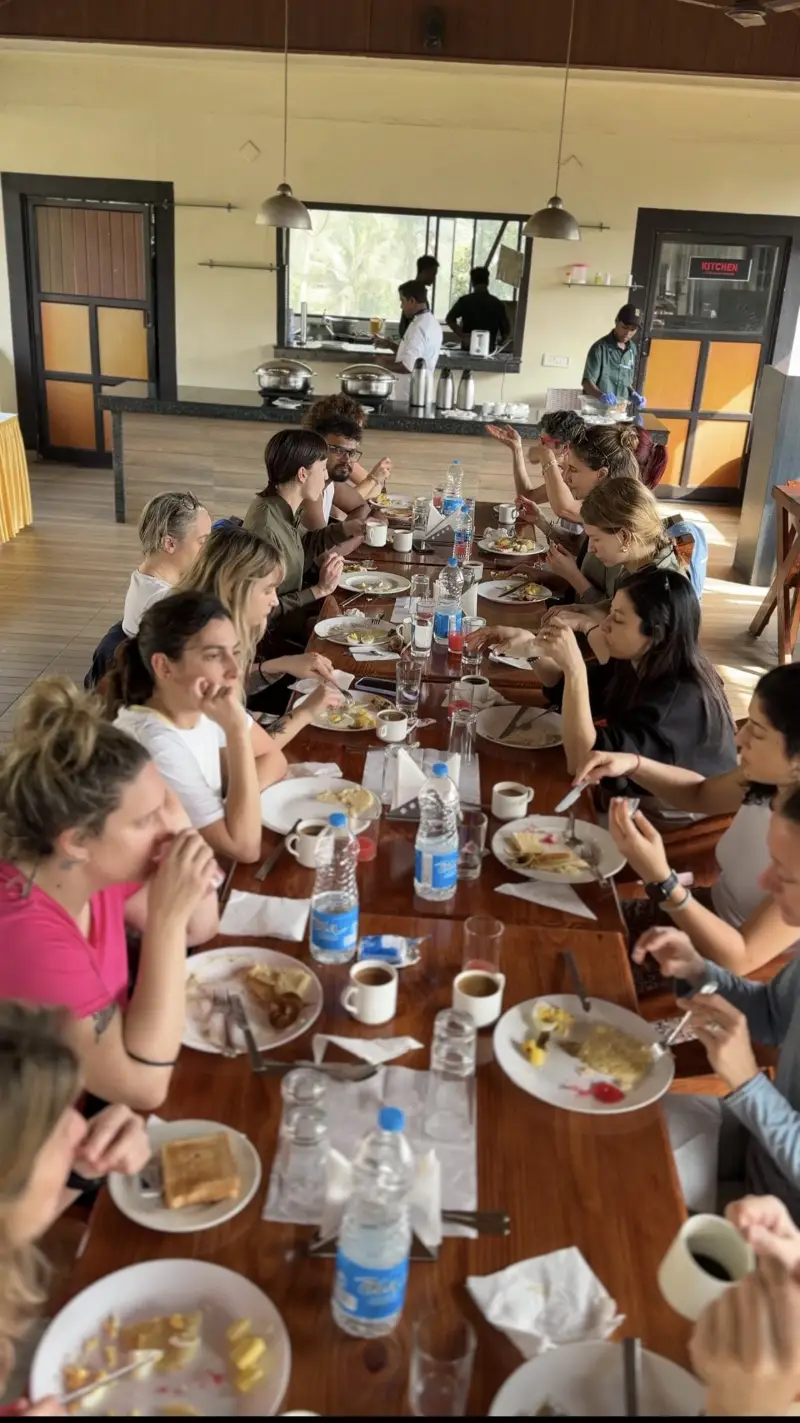
If you are here for a week of classes, what you eat matters more than usual, because you are practising two hours a day in the heat. This is what to order, and how to keep the meals light enough to practise on.
Why Kerala is easy
Temple towns, a long vegetarian tradition and an abundance of vegetables mean a "pure vegetarian" kitchen is never far away. Coconut does the work that cream and butter do elsewhere: coconut oil to cook, grated coconut in the vegetables, coconut milk in the gravies. That also makes much of the food naturally vegan, though not all of it.
What it is not is bland. Curry leaf, mustard seed, turmeric, green chilli and black pepper are in nearly everything, and Kerala's food is gently hot rather than fiery.
The dishes to know by name
| Dish | What it is |
|---|---|
| Avial | Mixed vegetables in a thick coconut and yoghurt sauce, finished with coconut oil and curry leaf. The signature Kerala vegetable dish. |
| Thoran | Finely chopped vegetables — beans, cabbage, carrot — stir-fried dry with grated coconut and mustard seed. |
| Olan | Ash gourd and cowpeas in thin coconut milk. Very mild; good when the heat has taken your appetite. |
| Sambar | Lentils with vegetables and tamarind, poured over rice. |
| Kadala curry | Black chickpeas in a dark roasted-coconut gravy. The classic partner to puttu. |
| Erissery | Pumpkin and beans with coconut, often at festival meals. |
| Rasam | A thin, peppery tamarind soup. Drunk at the end of a meal, and the best thing there is for a cold. |
| Pachadi | Yoghurt with cucumber or pineapple; cooling, and mildly sweet. |
Breakfast, the best meal of the day
Kerala breakfasts are steamed, not fried, and they suit a body that is about to practise or has just finished:
- Puttu — steamed cylinders of rice flour layered with coconut, eaten with kadala curry or banana.
- Appam — a lacy, bowl-shaped rice pancake, soft in the middle, with vegetable stew.
- Idiyappam — fine steamed rice noodles, eaten with coconut milk or curry.
- Idli and dosa — fermented rice and lentil batter, steamed or griddled, with sambar and chutney.
- Upma or uppumavu — savoury semolina with vegetables.
If you practise in the morning, eat after class rather than before. A cup of tea and a banana beforehand is enough; a full breakfast is not something you want to meet in a forward bend.
The sadya
A sadya is the traditional Kerala feast, served on a banana leaf: rice in the middle, a dozen or more small dishes around it, payasam for dessert. It is always vegetarian, and it is the fastest way to taste the whole repertoire at once.
A few conventions: the leaf's narrow end points left, you eat with your right hand, and mixing each curry into a little rice at a time is the way it is done. Folding the leaf towards you at the end signals that you enjoyed it. Sadya appears at festivals — Onam above all — and at lunch in many traditional restaurants.
How to ask, and what to watch for
- Say "pure vegetarian". It is the standard phrase and is understood everywhere.
- Name fish and egg separately. In coastal Kerala fish is an everyday staple, and "vegetarian" occasionally gets stretched. "No fish, no egg" removes the ambiguity.
- Ghee and curd are common in otherwise vegan dishes. If you avoid dairy, ask for coconut oil, and check pachadi and payasam.
- Watch for shared frying oil in places that cook both, if that matters to you.
- Tap water, no; bottled or filtered, yes. Skip ice in the first few days, and raw salads at street level.
- Onion and garlic appear in most restaurant food. A strictly sattvic diet leaves them out — see sattvic food explained — but you will need to ask specifically, and temple-style kitchens are the place to do it.
Eating around a daily practice
The old rule is simple: nothing heavy within two to three hours of practice. In the heat of Kerala it matters more, and most people find their appetite changes anyway within a few days of arriving.
- Before morning class (7:30 am): water, tea, perhaps a banana.
- After class: a full Kerala breakfast, the best meal you will eat all day.
- Lunch: the biggest meal, traditionally, and the one to linger over while it is hot outside.
- Before afternoon class (3:30 pm): keep lunch light, or eat early.
- Dinner: soup-like and simple. Rasam, appam and stew, or curd rice.
- Drink more than you think. Two hours of practice in this humidity takes it out of you; coconut water is the local answer and it works.
Where to look in Fort Kochi
Rather than name places that open and close, look for these, all within walking distance of the school:
- "Pure veg" boards on the smaller local restaurants near Chirattapalam and towards Mattancherry — cheapest, most authentic, best for a banana-leaf lunch.
- The cafes around Princess Street and Burgher Street, which cater to travellers, do good breakfasts, coffee and vegan options, at traveller prices.
- Jew Town in Mattancherry, for lunch after the antique shops and the synagogue.
- Homestays, many of which cook an excellent vegetarian dinner if you ask in the morning. This is often the best food you will eat in Fort Kochi.
- The fruit and vegetable stalls near the market, for bananas, papaya and tender coconut between classes.
For what else to do between meals, there is things to do in Fort Kochi and a slow morning in Fort Kochi. If you are curious about why yoga schools cook the way they do, ayurveda and yoga in Kerala explains the thinking behind the plate.
Common questions
Is it easy to eat vegetarian in Fort Kochi?
Very. Kerala cooking is built on rice, coconut, vegetables and pulses, and "pure vegetarian" restaurants are common. Say "no fish, no egg" as well, since fish is an everyday staple on the coast.
What is a Kerala sadya?
A traditional feast served on a banana leaf: rice surrounded by a dozen or more small vegetarian dishes, with payasam for dessert. It is always vegetarian and is served at festivals and at lunch in traditional restaurants.
What should you eat before a yoga class in Kerala?
Very little. Tea and a banana before a morning class, with the main breakfast afterwards. Leave two to three hours after a full meal before practising, especially in the humidity.
Is Kerala vegetarian food vegan?
Much of it is, because coconut oil and coconut milk replace butter and cream. Check for ghee, curd and yoghurt-based dishes such as pachadi, and ask for coconut oil if you avoid dairy.

Known to his students as Achu, Aksharanand trained in the Sivananda tradition and holds an Advanced Teacher Training Certificate. He has taught Hatha Yoga, pranayama, meditation and Vedanta philosophy in Fort Kochi for over fifteen years, across more than 5,000 group classes and seventy international teacher training batches.
More about Achu and the school · Book a class or ask a question