
In short
Sattvic food is fresh, vegetarian cooking, lightly spiced and eaten soon after it is made — the diet traditionally recommended for people who practise. It leaves out onion, garlic, heavy spice, alcohol, and anything stale or reheated repeatedly, on the reasoning that food which agitates or dulls the body makes sitting still harder.
The word comes from sattva, one of three qualities the tradition sees in everything, food included. It is not a health-food fad, and it predates every diet currently being sold.
The three qualities
- Sattva — clarity, lightness, balance. Fresh fruit and vegetables, whole grains, lentils, milk, nuts, honey.
- Rajas — activity, stimulation, restlessness. Heavy spice, onion, garlic, coffee, very salty or sour food.
- Tamas — heaviness, inertia, dullness. Stale or reheated food, fried food, alcohol, anything fermented at length.
None is evil. A farmer at harvest has good reason for rajasic food. Someone sitting for two hours of practice has good reason to avoid it.
What is actually on the plate
In Kerala the question answers itself fairly quickly, because a great deal of everyday home cooking here already sits close to the sattvic ideal: the local vegetarian kitchen with the stimulants turned down.
Rice is the centre of most meals — often the red, nutty Kerala matta rice.
Coconut appears everywhere: grated into thoran (dry vegetable stir-fries), ground into curries, pressed into milk for stews. It gives richness without heaviness.
Vegetables are local and seasonal: plantain, pumpkin, ash gourd, drumstick, long beans, cabbage, okra, leafy greens.
Pulses arrive as dal, as the lentil-and-vegetable sambar, or in the gentle coconut-and-lentil dishes of home kitchens.
Spices are used generously, but with balance: curry leaves, mustard seed, cumin, turmeric, ginger, black pepper, cardamom.
Fruit — bananas of a dozen kinds, papaya, pineapple, mango in season — sits at breakfast and in between meals.
Buttermilk, thin and salted, sometimes with ginger and curry leaf, is Kerala’s great digestive, and very sattvic.
The traditional sadya, the feast served on a banana leaf at festivals, is essentially a sattvic banquet: rice with a long procession of small vegetable dishes, sambar, rasam, pickles and a sweet payasam at the end.
What is left out, and why
- Onion and garlic. Considered rajasic and tamasic, heating and stimulating. This is the one that surprises visitors most.
- Heavy chilli. Kerala food can be fiery; sattvic cooking is not.
- Meat, fish and eggs. Vegetarian throughout.
- Alcohol, and usually coffee. Tea is common; strong coffee is not.
- Leftovers reheated again and again. Food is cooked for the meal it is eaten at.
A day of meals on a training
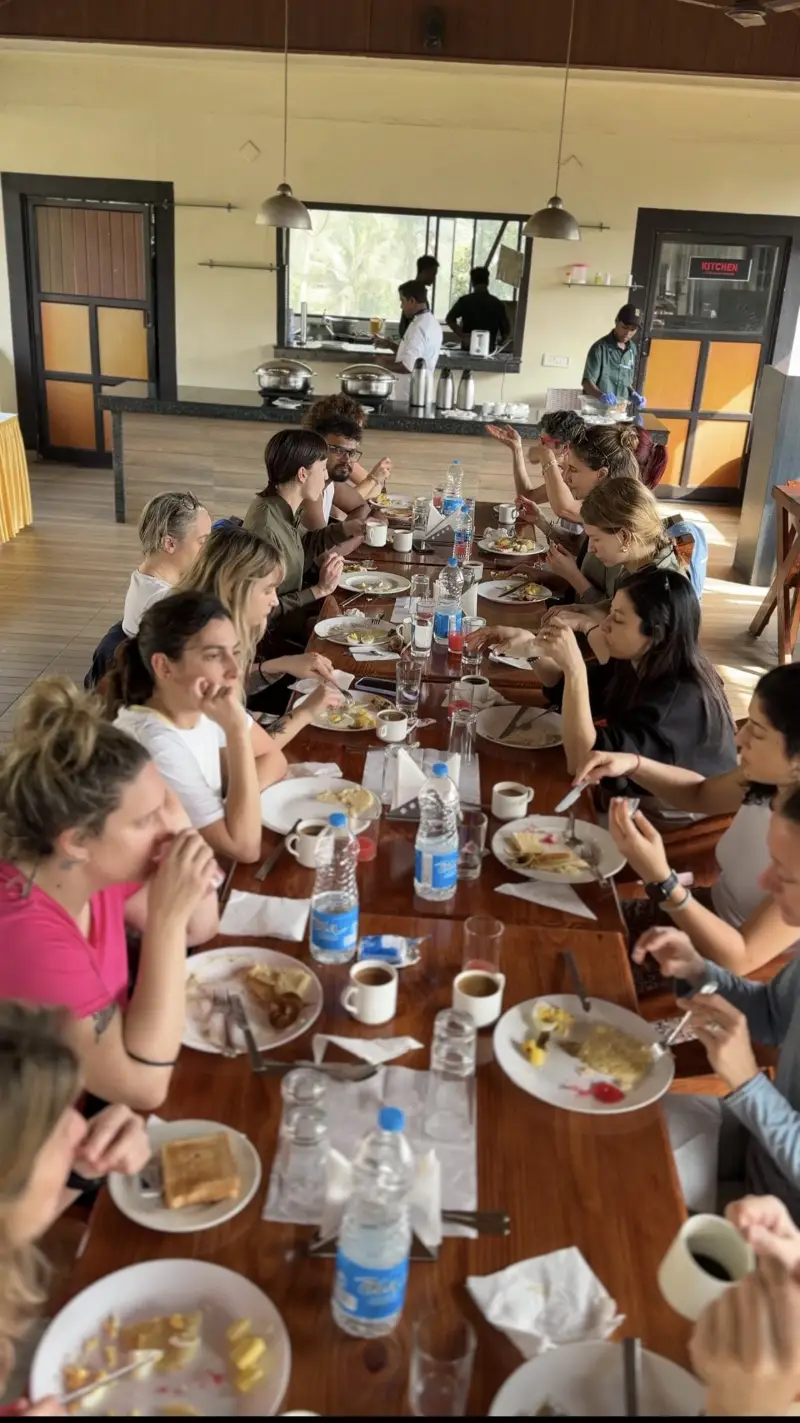
On our 28-day training, three sattvic vegetarian meals a day are included in the fee, along with Ayurvedic tea. A day tends to run something like this:
- After the morning practice: breakfast — fruit, something warm, tea. Practice comes first, on an empty stomach.
- Midday: the main meal, rice with vegetables, lentils, curd, a little pickle.
- Evening: lighter, and early enough that you are not sitting for the evening practice on a full stomach.
Most students notice two things by the second week: they are less sleepy in the afternoons, and they stop thinking about food, which frees up a surprising amount of attention.
Trying it at home
- Eat your largest meal in the middle of the day.
- Cook fresh for the meal rather than batch-cooking the week.
- Practise before eating, not after — at minimum two hours after a full meal.
- Leave onion and garlic out for a fortnight and notice what changes. That is the experiment, not the rule.
- Keep it simple. Sattvic cooking is not elaborate; it is plain food made carefully.
One honest note: this is a traditional framework for supporting practice, not a medical diet. If you have a health condition, are pregnant, or need particular nutrition, talk to your doctor or a dietitian before changing how you eat for a month.
If you are coming for a training, what to pack covers the practical side, and we are happy to answer questions about the food before you book — dietary needs included.
Ayurveda adjusts food to the individual through the three doshas — vata, pitta and kapha, explained.
Common questions
What is sattvic food?
Fresh, vegetarian food, lightly spiced and eaten soon after cooking: rice, vegetables, lentils, fruit, curd, nuts and gentle spices. It is the diet traditionally recommended for people who practise yoga.
Why is onion and garlic not allowed in sattvic food?
Both are considered stimulating and heating in the tradition — rajasic and tamasic rather than sattvic — and so are left out of food intended to support sitting practice and clear attention.
Is sattvic food vegan?
Not necessarily. Traditional sattvic cooking includes milk, curd and ghee, which are regarded as sattvic. Vegan versions are straightforward, and most schools, ours included, can cook without dairy if you ask.
What food is served on your teacher training?
Three sattvic vegetarian meals a day and Ayurvedic tea, all included in the €899 fee: Kerala cooking with rice, coconut, seasonal vegetables, lentils and gentle spicing, without onion, garlic or heavy chilli.

Known to his students as Achu, Aksharanand trained in the Sivananda tradition and holds an Advanced Teacher Training Certificate. He has taught Hatha Yoga, pranayama, meditation and Vedanta philosophy in Fort Kochi for over fifteen years, across more than 5,000 group classes and seventy international teacher training batches.
More about Achu and the school · Book a class or ask a question