
In short
December to February is the most comfortable time to practise yoga in Kerala: dry, a little cooler, and still warm enough to be barefoot at dawn. It is also the busiest and priciest. June to September is the south-west monsoon — wet, green and much quieter, with rooms and classes easier to come by.
People ask us this mostly as a travel question, but the answer is a practice question too. Heat, humidity and rain all change what a two-hour class feels like.
The short answer, by what you want
- Most comfortable practice: December to February.
- Fewest people, lowest prices: June to September.
- Warm water and long evenings: March, before the heat peaks.
- Green Kerala at its most beautiful: September and October, as the rain eases.
Kerala’s three seasons
Kochi sits a few degrees north of the equator on the Arabian Sea, so the temperature barely moves across the year — it is the humidity and the rain that change.
- The dry season, roughly December to February. Sunny, less humid, pleasant mornings and evenings.
- The hot season, roughly March to May. Humid and heavy, especially in April and May. Morning practice is a relief; afternoons are slow.
- The monsoon, roughly June to September, followed by the retreating monsoon in October and November. Heavy rain in bursts rather than all day, everything intensely green.
Month by month
- December. The best weather of the year, and Fort Kochi at its busiest. Book accommodation early. The Cochin Carnival fills the last week of the month.
- January. Dry, comfortable, and the busiest month for classes. Our teacher training runs 1–28 January.
- February. Still dry, gradually warmer, slightly quieter than January. A training batch runs 1–28 February.
- March. Warm and rising, sea still lovely, tourist crowds thinning.
- April and May. The hottest, most humid weeks. Practise in the morning, rest in the afternoon, drink more than you think you need. A training batch runs 1–28 April.
- June. The south-west monsoon arrives, usually in the first days of the month. Dramatic, cooler, and the start of the quiet season. A training batch runs 1–28 June.
- July and August. The wettest weeks, with genuinely green Kerala outside the window. Onam, the state’s biggest festival, falls in August or September.
- September. Rain easing, everything lush, very few visitors.
- October and November. The retreating monsoon brings shorter afternoon downpours. Prices are still low, and the light is beautiful.
What practising in the monsoon is actually like
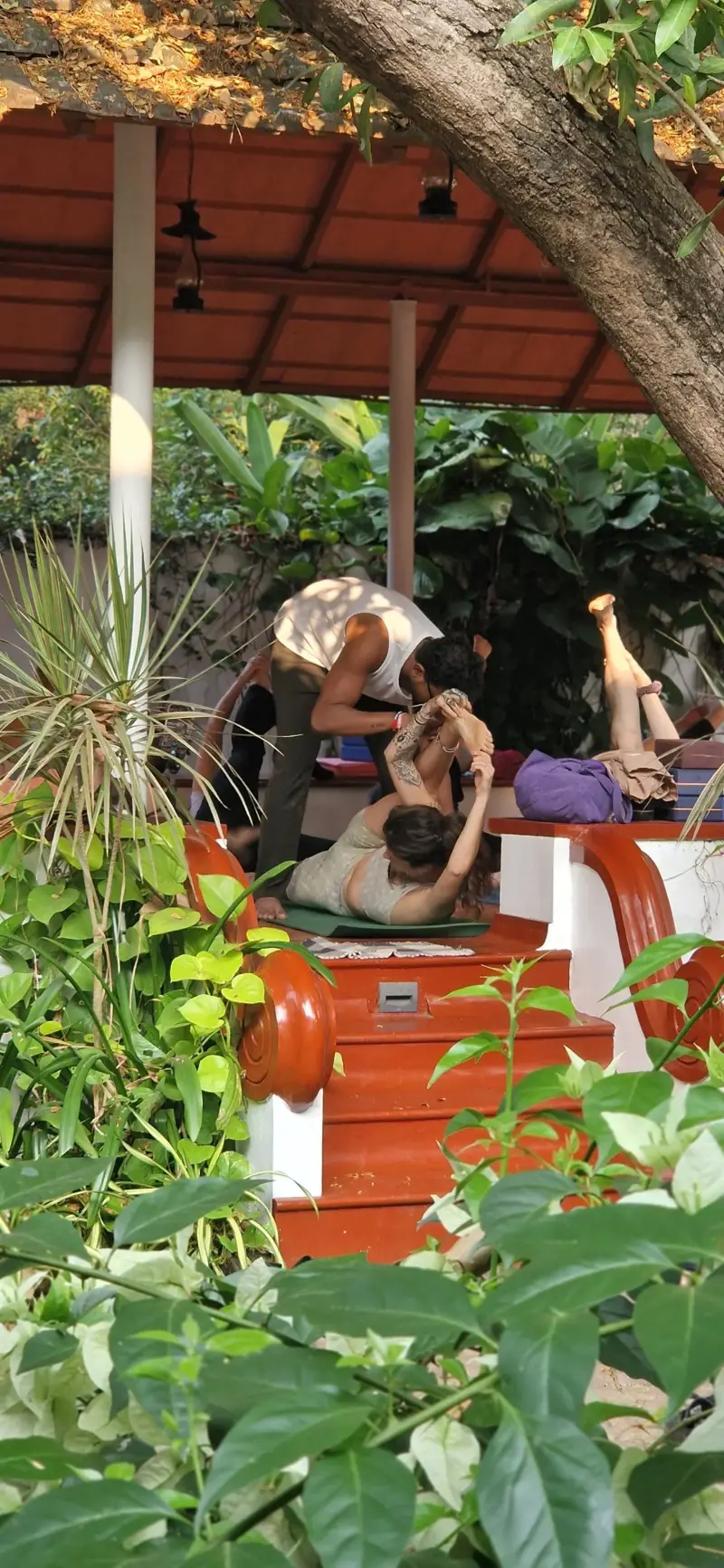
Visitors worry about the monsoon more than they need to. It rarely rains all day; it rains hard, then stops. Classes run as usual — ours are under a tiled roof in a garden pavilion, and the sound of rain during savasana is one of the better things about this place.
Practical things that change: the humidity makes you sweat more even in slow practice, clothes take longer to dry, and you will want sandals you do not mind soaking. Traditionally, the monsoon is also when Ayurvedic treatment is considered most beneficial in Kerala, which is why many clinics are busiest then.
Planning around classes and training
Our classes run every day of the year, morning and afternoon, so the season affects comfort rather than availability. The 200-hour yoga teacher training in Kerala runs in four fixed batches: 1–28 January, February, April and June 2027. If you want the training in the easiest weather, take January or February; if you want it quiet and green, take June.
For what to bring in each season, see what to wear to a yoga class in India. If you are planning a longer stay, a week of yoga in Fort Kochi sets out how the days fit together.
Once you have picked your month, a seven-day Kerala itinerary shows how to spend it.
Common questions
When is the best time to visit Kerala for yoga?
December to February is the most comfortable: dry, less humid and pleasantly warm for early morning practice. It is also the busiest and most expensive season. For quiet and low prices, come during the south-west monsoon between June and September.
Is it worth visiting Kerala during the monsoon?
Yes, if you do not mind rain. It rains in heavy bursts rather than all day, the state is at its greenest, classes run as normal, and accommodation is much cheaper. Humidity is high, so clothes dry slowly.
What is the weather like in Fort Kochi?
Warm all year, between roughly 23°C at night and 32°C in the day, with humidity rather than temperature marking the seasons. The south-west monsoon runs June to September, and the retreating monsoon brings further rain in October and November.
When does the 200-hour teacher training run?
Four batches in 2027, each 28 days: 1–28 January, 1–28 February, 1–28 April and 1–28 June, at €899 all-inclusive.

Known to his students as Achu, Aksharanand trained in the Sivananda tradition and holds an Advanced Teacher Training Certificate. He has taught Hatha Yoga, pranayama, meditation and Vedanta philosophy in Fort Kochi for over fifteen years, across more than 5,000 group classes and seventy international teacher training batches.
More about Achu and the school · Book a class or ask a question