
In short
A yoga retreat in Kerala usually means several days of daily practice, vegetarian food and accommodation in one price, somewhere quiet. What separates them is how much teaching you actually get, who does the teaching, and whether the place is a yoga school that also hosts guests or a hotel that also hosts yoga.
Kerala has water, hills, warm air and a long tradition of both yoga and Ayurveda, so it attracts retreat seekers from everywhere. That also means the word "retreat" covers everything from a serious two-week practice to a spa holiday with a sunrise stretch.
What a retreat usually includes
Most Kerala retreats bundle four things into one price:
- Practice. Typically one or two guided sessions a day, often morning asana and an evening slower practice or meditation.
- Food. Nearly always vegetarian, often sattvic — cooked simply, without heavy spice, onion or garlic.
- A bed. Shared or private, at the school or at a guesthouse nearby.
- Something of Kerala. A backwater trip, a temple visit, a hill walk, a cultural evening.
What is often not included: flights, airport transfers, treatments, and anything described as optional. Read that part of the page carefully.
Four kinds of retreat, and who each suits
- Backwater retreats near Alleppey and Kumarakom. Quiet, humid, beautiful, often remote — lovely for resting, harder if you want to come and go.
- Beach retreats around Varkala and Kovalam. Sociable, well-supplied with cafés, busy in season, and a long way from most of Kerala's daily life.
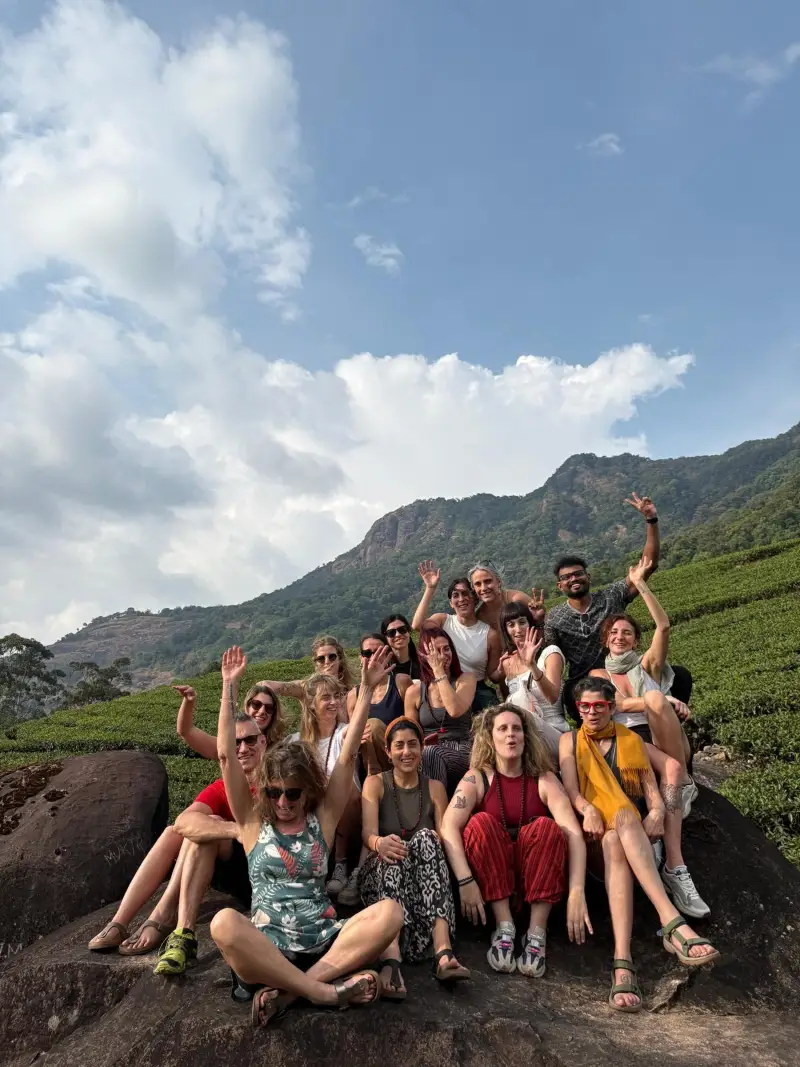
- Hill retreats around Munnar and Wayanad. Cooler, greener, good for walking, with longer travel at both ends.
- School-based retreats in a town like Fort Kochi. You practise where the teacher teaches every day, with the town and its food around you.
If your priority is the teaching, the last one is usually the safest bet: you are joining a working school rather than a venue hired for a week.
What actually drives the price
Two retreats a hundred kilometres apart can differ by a factor of ten. The price is mostly about the room, not the yoga.
- The accommodation — a resort suite versus a simple room at the school.
- Group size — a retreat capped at eight costs more per person than one taking thirty.
- Who teaches — a visiting international teacher usually costs more than the school's own.
- How much is included — treatments, excursions and transfers add up quickly.
- Season — December to February is peak, and priced accordingly.
More money buys a nicer room far more often than it buys better teaching.
When to come
December to February is dry and the most comfortable for practice. March to May is hot and humid. June to September is the south-west monsoon: green, dramatic, wet, and much cheaper. October and November bring the retreating monsoon and shorter bursts of rain. We have written a month-by-month version of this in the best time to visit Kerala for yoga.
Retreats at Santhi
Ours are run by the school itself, in and around Fort Kochi, combining daily practice with meditation, pranayama, philosophy and days out into Kerala — hills, water and the culture of the place. The seven-day residential version — two days in Fort Kochi, then five in the Munnar hills — runs under our retreat project, Samya Retreats.
The 2027 dates are 13–19 March, 4–10 September, 10–16 October and 4–10 December. They sit outside the teacher training months, so you can do both in the same year. You can see the full itinerary and prices, or send us a message and we will help you pick a date.
Questions to ask before you pay a deposit
- How many hours of teaching a day, and who teaches them?
- How many people will be in the group?
- Is the accommodation at the school or somewhere else, and is it shared?
- What exactly is included, and what is extra?
- What happens to my deposit if I cannot come?
- Is there anything scheduled at a fixed time that I must attend?
A school that answers those in a paragraph, quickly and in plain language, is usually the kind of place worth going to.
Common questions
How much does a yoga retreat in Kerala cost?
Prices vary enormously because most of the cost is the room, not the yoga. A simple retreat run by a school with shared accommodation is a fraction of a resort retreat with private rooms and treatments. Ask exactly what is included — food, transfers, excursions and treatments are the items that change the total most.
What is the best time of year for a yoga retreat in Kerala?
December to February is dry, cooler and the most comfortable for practice, and also the busiest and most expensive. June to September is the south-west monsoon: wet, green and much quieter. March to May is hot and humid.
What should I expect at a Kerala yoga retreat?
Usually one or two guided practices a day, vegetarian food, accommodation included, and some element of Kerala itself — backwaters, hills, a temple or a cultural evening. How much actual teaching you get varies a great deal, so ask before booking.
Do I need experience to join a yoga retreat?
For most retreats, no. Beginners are welcome on ours, and the practice is adapted around the people in the room. Tell the school about injuries or limitations when you enquire.

Known to his students as Achu, Aksharanand trained in the Sivananda tradition and holds an Advanced Teacher Training Certificate. He has taught Hatha Yoga, pranayama, meditation and Vedanta philosophy in Fort Kochi for over fifteen years, across more than 5,000 group classes and seventy international teacher training batches.
More about Achu and the school · Book a class or ask a question