
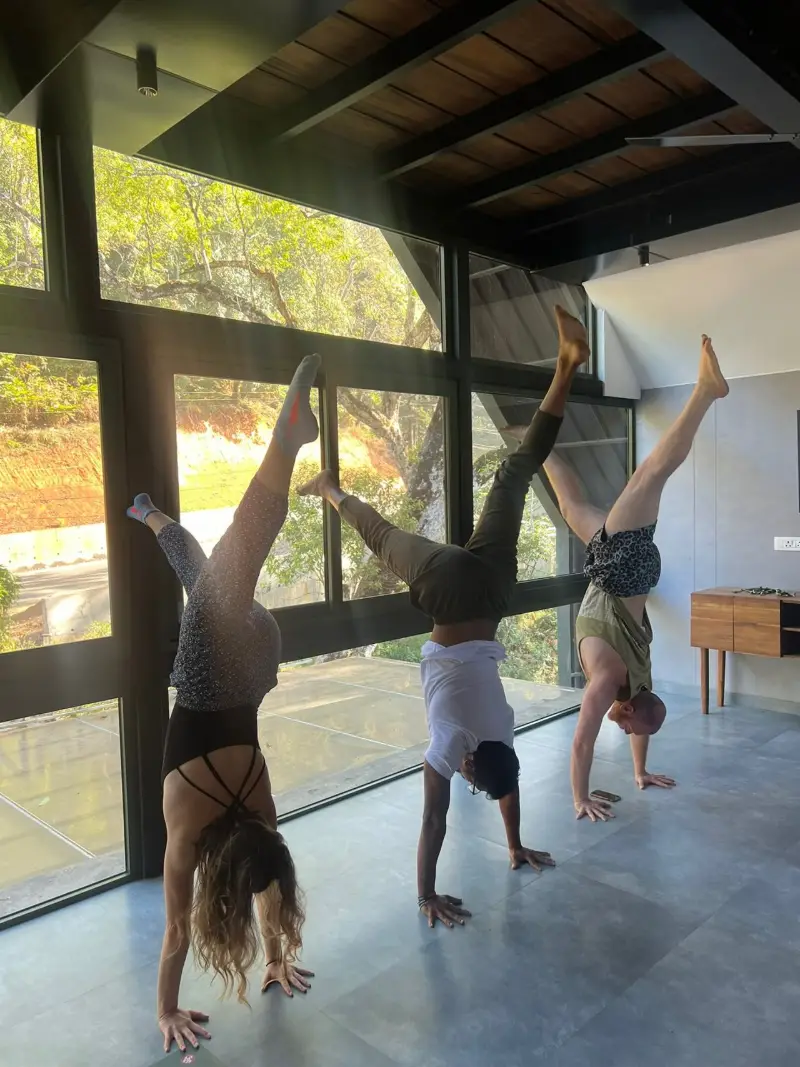
In short
Wear breathable, close-fitting clothes you can bend and turn upside down in, and bring water and a light layer. In India, leave your shoes outside, switch your phone off, arrive a few minutes early, keep strong scents at home, and dress modestly for the walk there. Most schools provide mats.
Clothing questions sound trivial until you are in a forward bend with your T-shirt over your face, or lying in final relaxation shivering because the fan is on and you are soaked. In the heat of Kerala, a few small choices make the difference between a class you enjoy and one you endure.
Etiquette is the other half. Classes in India carry some customs that visitors are rarely told about, and none of them are difficult once you know. For class times and prices in Fort Kochi, see our guide to yoga in Fort Kochi.
- Fabric
- Breathable: cotton, linen, light blends
- Fit
- Close enough to stay put upside down
- Shoes
- Off, outside the door
- Phone
- Off, and out of sight
- Bring
- Water, small towel, light layer
- Leave at home
- Perfume and valuables
Clothes for yoga in Kerala’s heat
Kochi is humid all year, from around 61% in January to 83% in July on average. You will sweat, even in a slow class. So the question is not how to stay dry, but what feels comfortable when you are not.
| Fabric | In a Kerala class |
|---|---|
| Cotton | Cool and comfortable against the skin. Heavier once soaked, but most people prefer it in a slow class. |
| Linen or cotton blends | Very breathable. Choose ones with a little stretch. |
| Technical synthetic fabric | Dries fast and holds its shape. Can feel hot and hold odour in humid air. |
| Thick or heavy fabric | Avoid. It traps heat and restricts movement. |
Fit matters more than fabric
- Tops: fitted, or long enough to tuck in. A loose top will fall over your head in forward bends and inversions.
- Bottoms: leggings, fitted cotton trousers, or loose trousers gathered at the ankle. Very loose shorts can ride up in seated postures.
- Avoid zips, large buttons and belts, which dig in when you lie on your front.
- Tie long hair low, not in a high bun or a clip at the back of the head, so you can lie on your back comfortably.
- Take off jewellery that swings or catches: large earrings, bracelets, long necklaces.
Dressing for the walk there
Fort Kochi is a relaxed, international neighbourhood, but it is also a place where families live and people go to church, temple and mosque. Covering your shoulders and knees on the street is a simple courtesy, and helpful if you are visiting sights on the same day. Many students simply wear a loose shirt or wrap over their practice clothes and take it off in class.
What to bring, and what to leave behind
| Bring | Why |
|---|---|
| Water | For before and after class. Sip, rather than gulping between postures. |
| A small towel | For your face and hands, and to keep your grip on the mat. |
| A light layer | For final relaxation. The body cools quickly once it stops moving, especially under a fan. |
| A hair tie | You will want it. |
| Unscented insect repellent | For classes in garden spaces, applied before you arrive. |
Leave at home: perfume, strong deodorant or scented oils, which others notice when breathing deeply; valuables; and a mat, unless you prefer your own. Most schools, including ours, provide mats.
Etiquette that matters in India
Shoes off, outside
Just as in Indian homes and temples, shoes come off before you step into the practice space, and are left outside or by the door. Practise barefoot; socks slip on a mat.
Phones off and away
Silent is not enough: a screen lighting up during relaxation disturbs everyone. Switch it off and leave it with your shoes or in your bag.
Arrive early, and if you are late, arrive quietly
Arrive five to ten minutes before the start so you can settle and speak to the teacher. Traditional classes often begin with breathing practice in silence, which is the worst moment to arrive. If you are running late, message the teacher rather than walking in unannounced.
Mind your feet
In India, pointing the soles of your feet at a person, a teacher or an image of a deity is considered disrespectful. If the room has a small altar or pictures of teachers, avoid stretching your feet towards them while sitting.
Chanting: join in, or listen
Many classes open or close with a short chant such as Om. Join in if you like, or sit quietly. Nobody is asking you to adopt a belief.
Hands-on adjustments are your choice
Teachers in traditional classes often correct with a hand. If you would prefer not to be touched, tell the teacher at the start. It is a normal request.
Periods, illness and practice
During your period, whether and how you practise is your choice. Many traditional teachers suggest a gentler practice and avoiding inversions during the first days. You can simply rest in child’s pose when the class goes upside down; no explanation is needed.
If you are ill — a fever, or anything contagious — stay home and come back when you are well. Mention any recent illness to the teacher.
Mistakes visitors often make
- Wearing a loose vest top that rides up in every forward bend.
- Eating a full lunch an hour before an afternoon class.
- Walking in during the opening breathing practice.
- Leaving a phone on for "just one message".
- Skipping the final relaxation to beat the crowd out.
If this is your first class, our beginner’s guide to your first yoga class covers what happens in the room.
Practise with us in Fort Kochi
Traditional two-hour Hatha Yoga classes, mornings 7:30–9:30 am and afternoons 3:30–5:30 pm. All levels, no booking needed. Message us for the day’s schedule.
One word you will hear at the end of almost every class: what namaste actually means, and namaskaram in Kerala.
Common questions
What should I wear to a yoga class in India?
Breathable, close-fitting clothes you can bend and turn upside down in without adjusting them, such as cotton leggings or trousers and a fitted top. Bring a light layer for the final relaxation and dress modestly for the walk to class.
Can I wear shorts to a yoga class in Kerala?
Fitted shorts are fine in most classes. Very loose shorts ride up in seated postures. For the walk to class, cover your knees and shoulders as a courtesy, especially in residential areas and near places of worship.
Do I need to bring my own yoga mat?
Usually not. Most yoga schools in India provide mats, including ours in Fort Kochi. Bring your own only if you prefer it, and ask ahead if you are unsure.
Should I wear socks to yoga?
No. Practise barefoot. Socks slip on a mat and make standing postures less stable.
Can I do yoga on my period?
Yes, if you feel like it. Many traditional teachers suggest a gentler practice and avoiding inversions in the first days. You can rest in child’s pose whenever you like without explaining.
What if I arrive late to a yoga class?
Message the teacher before you arrive. Traditional classes often begin with quiet breathing, so walking in unannounced during the opening disturbs the room. Aim to arrive five to ten minutes early.

Known to his students as Achu, Aksharanand trained in the Sivananda tradition and holds an Advanced Teacher Training Certificate. He has taught Hatha Yoga, pranayama, meditation and Vedanta philosophy in Fort Kochi for over fifteen years, across more than 5,000 group classes.