
In short
A week works well as Fort Kochi for two or three nights, Munnar for two, and the Alleppey backwaters for one or two, returning to Kochi to fly. Roads are winding: Kochi to Munnar is four to five hours, Munnar to Alleppey four to five, Alleppey back to Fort Kochi about two. Three bases in seven days is comfortable; four is a week spent in a car. December to March has the best weather.
We meet a lot of people mid-itinerary, usually in the morning class, and there is a recognisable look on the faces of those who tried to fit in one place too many.
Kerala rewards fewer stops. Here is a week that works.
The shape of the week
Three bases, arranged as a loop from Kochi:
- Fort Kochi — 2 to 3 nights. Coast, history, food, and the easiest possible landing after a long flight.
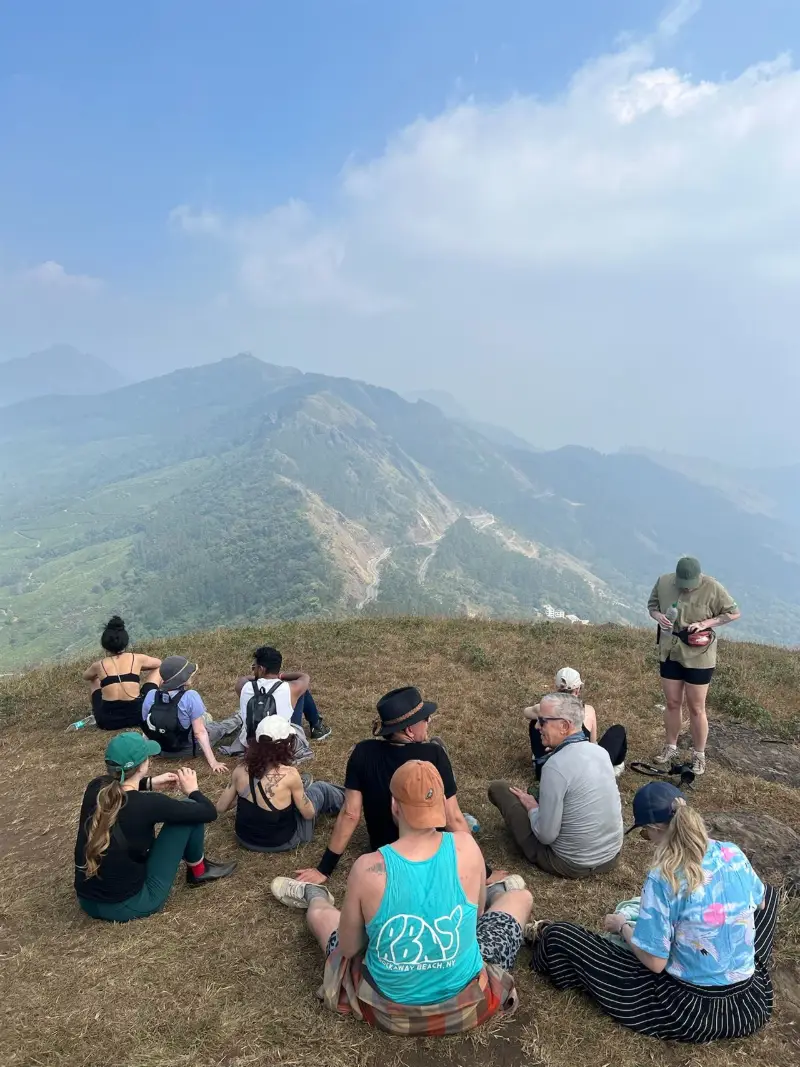
- Munnar — 2 nights. Tea hills at 1,600 metres, cool enough for a jumper at night.
- Alleppey — 1 to 2 nights. Backwaters, and a houseboat if you want one.
Then back to Kochi for the flight. The loop avoids retracing, and it puts the long drives in the middle of the week rather than at either end.
Days 1 to 3: Fort Kochi
Start here. It is about an hour and a half from the airport — the detail is in getting from the airport — and it is a flat, walkable, unhurried place to shed a long flight.
Day 1. Arrive, walk to the Chinese fishing nets in the late afternoon, eat early, sleep. Do not plan anything. Gentle movement helps more than a nap if you land in the morning.
Day 2. The old town properly: the lanes of lime-washed houses, St Francis Church, the Dutch Palace and the synagogue in Mattancherry, and Jew Town for the spice warehouses. A Kathakali performance in the evening — arrive an hour early to watch the make-up being applied, which is the better half. There is a full local guide in things to do in Fort Kochi.
Day 3. A slower morning, then drive to Munnar after lunch — or stay a third night if you would rather do a proper slow morning first. If you are here to practise, the 7:30 class fits neatly before a midday departure.
Days 4 and 5: Munnar
The drive climbs through rubber and spice country into tea. It is genuinely beautiful and genuinely winding; if anyone in the car gets travel sick, sit them in front.
Day 4. Arrive, settle, walk in the tea estates near wherever you are staying. Evenings are cool and quiet.
Day 5. An early start for the sunrise at Kolukkumalai — one of the highest tea estates in the region, reached by jeep on a rough track, and worth the alarm. Afterwards, the Tea Museum, Mattupetty dam, Top Station, or simply a long walk. Eravikulam National Park is excellent but closes for calving in roughly February and March, so check before you plan around it.
Days 6 and 7: the backwaters
Day 6. Drive down to Alleppey. If you are doing a houseboat, they generally board around midday and moor for the night, so an early start matters. The alternative — cheaper, quieter and preferred by a lot of people — is a homestay near the water plus a small shikara boat for a few hours, which reaches the narrow canals the big houseboats cannot.
Day 7. Houseboats disembark early. Alleppey to Fort Kochi is about two hours, so a late-afternoon or evening flight is comfortable from here. If your flight is early the next morning, spend the last night back in Fort Kochi or near the airport.
Honest travel times
| Route | Time |
|---|---|
| Kochi airport to Fort Kochi | about 1.5 hours |
| Fort Kochi to Munnar | 4–5 hours |
| Munnar to Alleppey | 4–5 hours |
| Alleppey to Fort Kochi | about 2 hours |
| Alleppey to Kochi airport | 2.5–3 hours |
These are driving times on winding roads, not motorway times, and they do not include stops. Add an hour to anything involving Kochi city at rush hour. A car with a driver for the week is the normal way to do this and is not expensive shared between two or more people.
When to come
December to March is the best weather: dry, warm on the coast, cool in the hills. December and early January are the busiest and priciest. February is the quiet sweet spot.
April and May are hot and humid on the coast; Munnar stays comfortable.
June to September is the southwest monsoon — green, dramatic, quiet and cheap, with the caveat that hill roads and boat trips can be disrupted. It is a better season than its reputation suggests, and there is a case for it in practising through the monsoon.
October and November bring the northeast monsoon as afternoon showers, with clear mornings and everything still green.
More detail in the best time to visit Kerala.
Two variations
If you want a beach instead of the hills: Fort Kochi 3 nights, Alleppey 2, then Marari beach 2. Almost no driving, and the most restful version of the week.
If you want to practise rather than sightsee: stay in Fort Kochi the whole week, take the 7:30 and 3:30 classes daily, and use the afternoons for the town and one day trip. It sounds like less of a holiday and is usually remembered as more of one — a week of yoga in Fort Kochi sets it out. Classes are 30% off for stays over a week, and you can walk in without booking.
Each stop has its own guide: Munnar and the tea hills, and the Alleppey backwaters, houseboat or homestay.
Common questions
Is 7 days enough for Kerala?
Yes, for three places done properly. Fort Kochi, Munnar and the Alleppey backwaters make a comfortable week. Attempting four bases in seven days means spending most of it in a car on winding roads.
What is the best order for a Kerala itinerary?
Kochi first, since you fly in there and it is the gentlest landing, then Munnar, then Alleppey, then back to Kochi. That loop avoids retracing and puts the long drives mid-week.
How long does it take to drive from Kochi to Munnar?
Four to five hours, sometimes more with stops or traffic leaving the city. The road is winding and climbs to about 1,600 metres, so it takes longer than the distance suggests.
Do I need a houseboat in Alleppey?
Not necessarily. Houseboats are comfortable but large, and they cannot enter the narrow canals. A homestay by the water plus a few hours on a small shikara boat is cheaper, quieter and gets you closer to village life.

Known to his students as Achu, Aksharanand trained in the Sivananda tradition and holds an Advanced Teacher Training Certificate. He has taught Hatha Yoga, pranayama, meditation and Vedanta philosophy in Fort Kochi for over fifteen years, across more than 5,000 group classes and seventy international teacher training batches.
More about Achu and the school · Book a class or ask a question