
In short
Most 200-hour yoga teacher trainings in Kerala run 21–28 days and cost roughly US$900–1,600 including shared accommodation and vegetarian meals. The main places to train are Varkala (beach, many schools), Fort Kochi (historic town, small schools), Kovalam (beach and Ayurveda), Neyyar Dam (the Sivananda ashram) and the hills around Munnar. November to March is the most comfortable season. Choose on the lead teacher, the batch size and the daily timetable before the location.
I have taught yoga in Fort Kochi for over fifteen years, and students who write to us have usually looked at three or four other Kerala schools first. This is the comparison I would give a friend. It sits alongside our broader guides to choosing a 200-hour yoga teacher training and Kerala versus Rishikesh.
Why train in Kerala?
- Tradition. Kerala has a strong classical Hatha culture and the long-established Sivananda ashram at Neyyar Dam.
- Ayurveda. The state is the centre of Ayurvedic medicine in India, and many courses include an introduction to it. See how Ayurveda and yoga fit together.
- Food. Vegetarian South Indian cooking is the norm, not a special request; see sattvic food explained.
- Climate. Warm all year, which makes the body supple from the first morning. It also means heat and humidity to plan for.
- Ease. Kochi and Thiruvananthapuram both have international airports, and Kerala is among the safest and most literate states in India.
Where to train in Kerala
| Place | Setting | Typical schools | Suits you if |
|---|---|---|---|
| Varkala | Clifftop beach town, about 50 km north of Thiruvananthapuram | Many international schools, often Yoga Alliance registered, often larger batches | You want the beach, a social scene and plenty of choice |
| Fort Kochi | Historic port town in central Kerala, near Kochi airport | A few small, long-established local schools | You want culture, a real town and small groups |
| Kovalam | Beach resort south of Thiruvananthapuram | Resort and Ayurveda-centre trainings | You want Ayurvedic treatment alongside training |
| Neyyar Dam | Forested lakeside ashram near Thiruvananthapuram | The Sivananda Yoga Vedanta Dhanwantari Ashram | You want a strict ashram routine and lineage |
| Munnar and the hills | Tea estates and hills, cooler nights | Occasional retreat-style trainings | You find coastal heat hard and want quiet |
Our article on where to do yoga in Kerala describes each of these places in more detail as a destination.
What a 200-hour course in Kerala costs
| Type of course | Typical fee | Usually includes |
|---|---|---|
| Small local school | US$900–1,100 | Tuition, shared room, meals, certificate |
| International beach school | US$1,000–1,600 | Tuition, room by type, meals, excursions; private rooms extra |
| Resort or Ayurveda-centre course | US$1,600–3,000 | Private rooms, treatments, pool |
| Ashram course | Ask the ashram | Dormitory or simple room, ashram meals, strict timetable |
Add flights, an e-visa, insurance and a few days either side. Our full breakdown of what a 200-hour training in India really costs has worked budgets, and our visa guide covers the paperwork.
When to go
November to March is the most comfortable: dry, sunny, with cooler mornings. It is also the busiest, so popular schools fill early.
April and May are hot and humid; training is very possible, just slower. June to September is the monsoon: green, cool and quiet, with heavy rain. Some beach schools close for it, while town schools like ours carry on. Our month-by-month page on the best time to visit Fort Kochi shows what each season is like.
Questions to ask any Kerala school
- Who teaches the course, and for how many of the hours? A famous founder who appears twice is not the same as one who teaches every day.
- How many students are in a batch? Hands-on correction becomes hard above about fifteen.
- What does a day look like, hour by hour? Ask for the real timetable.
- What is the certificate, exactly? Yoga Alliance RYS, a YCB certification, or the school’s own? See AYUSH YCB versus Yoga Alliance.
- What is excluded? Airport transfers, laundry, private rooms, excursions, Ayurvedic treatments.
- What happens if I have to cancel? Get the refund policy in writing.
- Can I speak to a past student? A good school will introduce you.
If an answer is vague, or the school pushes you to pay quickly, read our red flags guide before going further.
Our own course in Fort Kochi
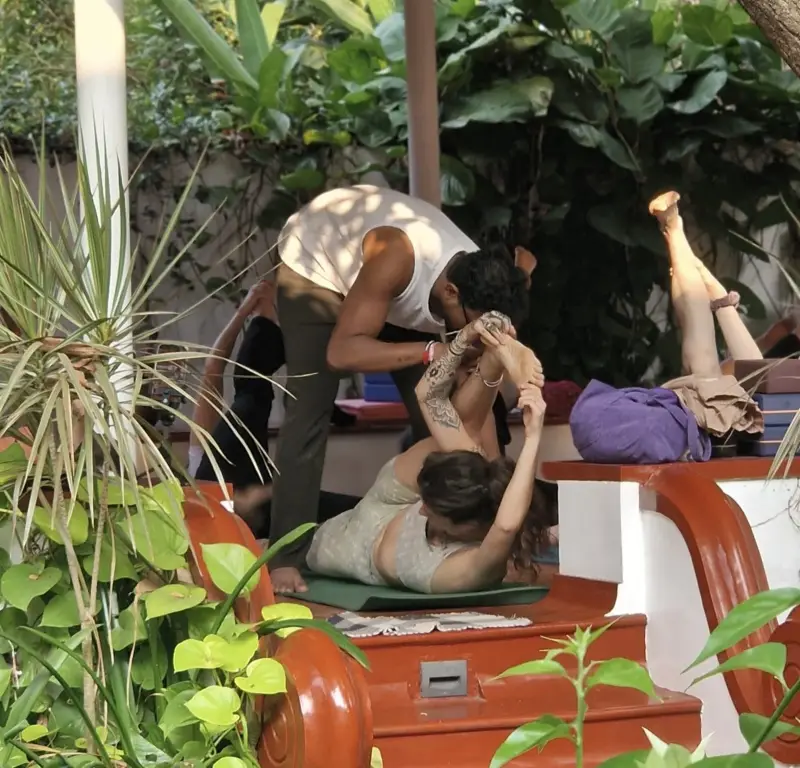
Since this is a guide to choosing, here are our numbers as plainly as everyone else’s. Our 28-day, 200-hour training runs in Fort Kochi’s old town, taught by Master Aksharanand A S (Achu) of Santhi School of Yoga together with Nithin Xavier of Praana Yoga Studio. The fee is €899 all-inclusive: tuition, accommodation, three sattvic meals a day, study materials and excursions. The 2027 batches start on 1 January, 1 February, 1 April and 1 June, and a €90 deposit holds a place.
The course is not a Yoga Alliance Registered Yoga School course; graduates receive the school’s own 200-hour certificate. Full details, dates and the timetable are on our 200-hour yoga teacher training in Kerala page.
Ask us anything before you choose
Batch size, the daily timetable, the heat, whether you are ready. You will get a reply from the person who teaches the course.
Common questions
How much does yoga teacher training cost in Kerala?
A residential 200-hour course in Kerala usually costs about US$900 to 1,600 with shared accommodation and meals. Resort and Ayurveda-centre courses can reach US$3,000.
Which is the best place in Kerala for yoga teacher training?
It depends on what you want: Varkala for the beach and choice of schools, Fort Kochi for culture and small groups, Neyyar Dam for an ashram, and Kovalam for Ayurveda.
How long is a yoga teacher training in Kerala?
Most 200-hour courses run 21 to 28 days, six days a week, with one free day each week.
What is the best month for yoga teacher training in Kerala?
November to March is the most comfortable. April and May are hot, and June to September is the monsoon, when some beach schools close.
Is Kerala better than Rishikesh for yoga teacher training?
Neither is better overall. Kerala is warmer, greener and quieter, with strong Ayurveda and Hatha traditions; Rishikesh has more schools and a Himalayan setting.
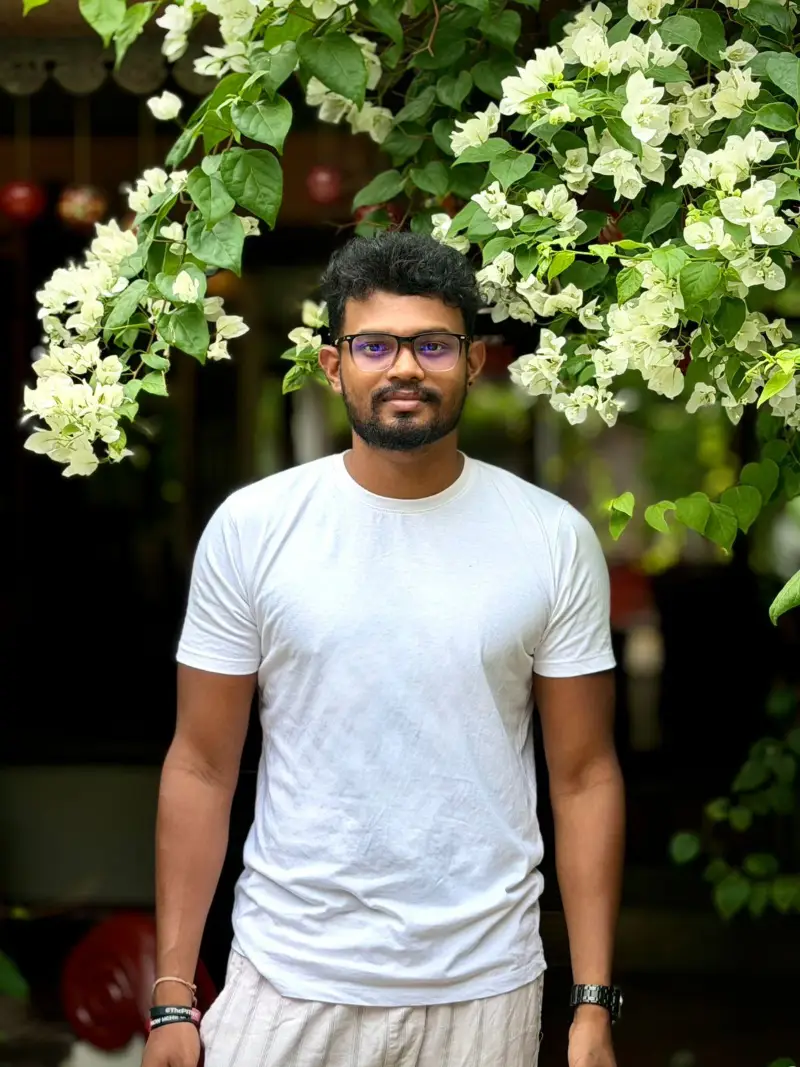
Known to his students as Achu, Aksharanand trained in the Sivananda tradition and holds an Advanced Teacher Training Certificate. He has taught Hatha Yoga, pranayama, meditation and Vedanta philosophy in Fort Kochi for over fifteen years, across more than 5,000 group classes and seventy international teacher training batches.
More about Achu and the school · Book a class or ask a question