
In short
Fort Kochi is one of the more relaxed places in India for a woman travelling alone. It is small, walkable, used to visitors, and busy with families in the evening. Take ordinary precautions: dress modestly, especially at churches, the synagogue and temples; use app cabs or agree auto fares before setting off; keep to lit, busy streets after dark; and save 112 (the national emergency number) in your phone. A daily class, a cooking class or a Kathakali show are easy ways to meet people.
Safety is a fair question for any woman travelling alone, and it is one we are often asked, usually in a quiet word after class. The honest answer is that Fort Kochi is a good choice. Kerala has high literacy and a long history of welcoming travellers, and Fort Kochi in particular is a small, family-oriented town that has hosted visitors for centuries. Most women who stay here feel comfortable within a day or two.
That said, India is India, and a few habits make a real difference. None of this is meant to alarm you; it is the same advice a friend who lives here would give.
What to wear
Kerala is more conservative than Goa or the backpacker towns of the north, and Fort Kochi is a residential town as much as a tourist one.
- Everyday: loose, light clothing that covers the shoulders and knees draws the least attention and is the most comfortable in the heat anyway. Linen trousers, long skirts and cotton kurtas are ideal and cheap to buy locally.
- Churches, the synagogue and temples: shoulders and knees covered, always. A light scarf in your bag solves most situations.
- The beach: it is a family seafront, not a sunbathing beach. Swimwear on its own will attract stares. See our guide to Fort Kochi Beach.
- Yoga class: leggings or loose trousers and a T-shirt are fine for practice. Our guide to what to wear to a yoga class in India has the details.
Getting around
On foot
By day, walking is the best way to see Fort Kochi, and it is perfectly comfortable alone. The old town is compact and there are always people about.
Auto-rickshaws and cabs
- Uber and Ola both work in Kochi, including app-booked autos. They give you a fixed fare, a driver’s name and a trip you can share with someone.
- With a street auto, agree the fare before you get in. If a driver insists on taking you to a shop “just to look”, say no firmly and ask to go straight to your destination.
- Arriving at the airport, use the prepaid taxi counter or an app, not a driver who approaches you. Our airport guide covers the journey.
After dark
The waterfront, Princess Street and the main roads stay busy into the evening, and the sunset crowd at the beach is mostly families. Later at night, and on the unlit stretches of beach and quieter lanes, take an auto rather than walk. This is simply common sense, and local women do the same.
Where to stay
- Homestays are the Fort Kochi speciality and a good choice for solo women: family-run, with hosts who will look out for you and answer every question. Read recent reviews from other women before booking.
- Hostels near the waterfront and Princess Street are the easiest place to meet people. Look for ones with female dorms if you prefer.
- Location: within the old town, so you can walk home from dinner on lit streets. Our guide to where to stay compares the areas.
Unwanted attention
Staring is the most common issue, and it is usually curiosity rather than hostility, particularly from visitors from other parts of India. Requests for selfies are common too; you can simply say no. Harassment is not common in Fort Kochi, but if someone makes you uncomfortable:
- Say “no” firmly and move towards other people, especially other women or families.
- Shopkeepers, homestay hosts and restaurant staff will generally step in if asked.
- Call 112 in an emergency, or 1091, the women’s helpline. Fort Kochi has its own police station, and Kochi City Police run a tourism police unit.
Meeting people
Travelling alone does not have to mean being alone. Fort Kochi is full of other solo travellers, and it is easy to fall into company.
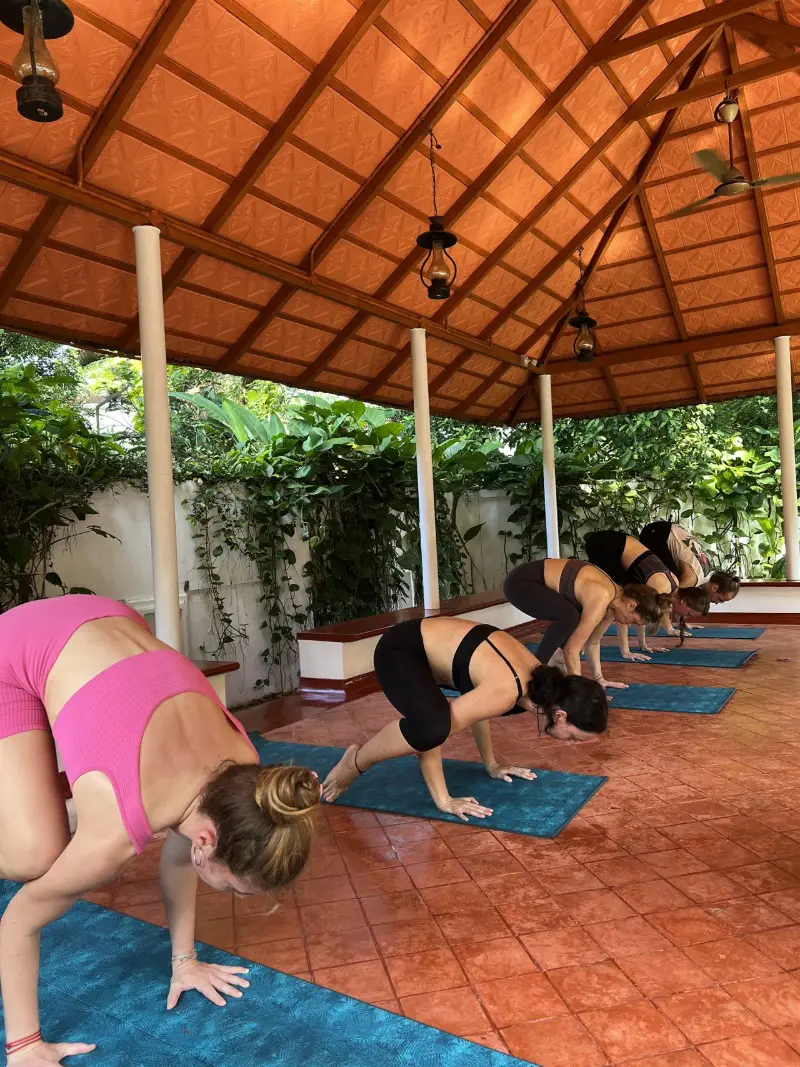
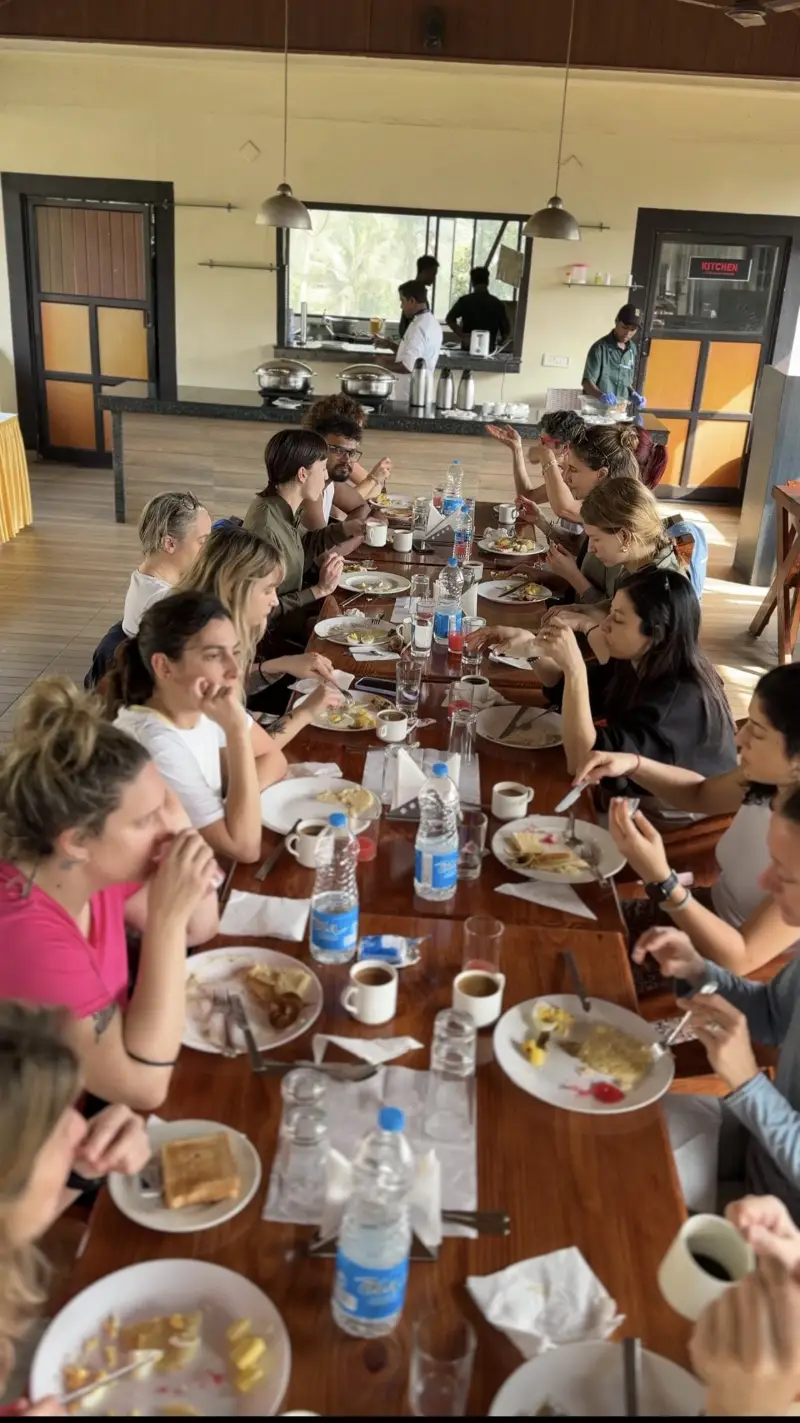
- A daily yoga class. This is the most reliable one, and not only because we run one. A small group meeting at the same time every day becomes a little community within two or three days. People go for breakfast together after the morning class, or to the sunset after the afternoon one.
- A cooking class at a homestay, usually a small group around a kitchen table.
- Kathakali in the evening, where the make-up session before the show is a natural place to chat. See Kathakali in Fort Kochi.
- Hostel common areas and art cafés, which fill with travellers in the heat of the afternoon.
Health and practical matters
- Water: drink bottled or filtered water. Most homestays offer refills.
- Sun and heat: sightsee early, rest at midday, carry water.
- Periods: sanitary pads are sold in every pharmacy; tampons and menstrual cups are harder to find, so bring your own. If you are wondering about practising yoga during your period, we have written about what we actually teach.
- SIM card: a local SIM makes cabs, maps and messaging much easier. You will need your passport and a photo.
- Tell someone your plans, whether a friend at home, a homestay host or a new friend from class.
A class is the easiest way to meet people
A small group of travellers and locals, every day at 7:30–9:30 am and 3:30–5:30 pm. ₹500 a class (a limited-time offer; normally ₹600, and ₹700 from November 2026). No booking, no experience needed; mats provided. Message us the evening before a morning class, or with any question at all.
Planning a longer stay? A week of yoga in Fort Kochi shows how a week here tends to go, and things to do in Fort Kochi covers the town by the time of day.
Common questions
Is Fort Kochi safe for solo female travellers?
Fort Kochi is generally considered one of the more comfortable places in India for women travelling alone. It is small, walkable and busy with families. Ordinary precautions still apply: dress modestly, use app cabs or agree auto fares first, and keep to lit, busy streets after dark.
What should women wear in Fort Kochi?
Loose, light clothing that covers the shoulders and knees is the most comfortable and draws the least attention. Always cover shoulders and knees at churches, the synagogue and temples. A light scarf is useful to carry.
Is it safe to walk in Fort Kochi at night?
The waterfront, Princess Street and the main roads stay busy into the evening and are fine to walk. Later at night, and on unlit stretches of beach or quiet lanes, take an auto-rickshaw or app cab instead.
What are the emergency numbers in Kerala?
112 is India’s national emergency number. The women’s helpline is 1091, and the Kerala Tourism helpline is 1800 425 4747, toll-free.
How can I meet other travellers in Fort Kochi?
A daily yoga class is the most reliable way, since the same small group meets every day. Cooking classes, Kathakali performances, hostels and art cafés are also easy places to meet people.

Known to his students as Achu, Aksharanand trained in the Sivananda tradition and holds an Advanced Teacher Training Certificate. He has taught Hatha Yoga, pranayama, meditation and Vedanta philosophy in Fort Kochi for over fifteen years, across more than 5,000 group classes and seventy international teacher training batches.
More about Achu and the school · Book a class or ask a question