
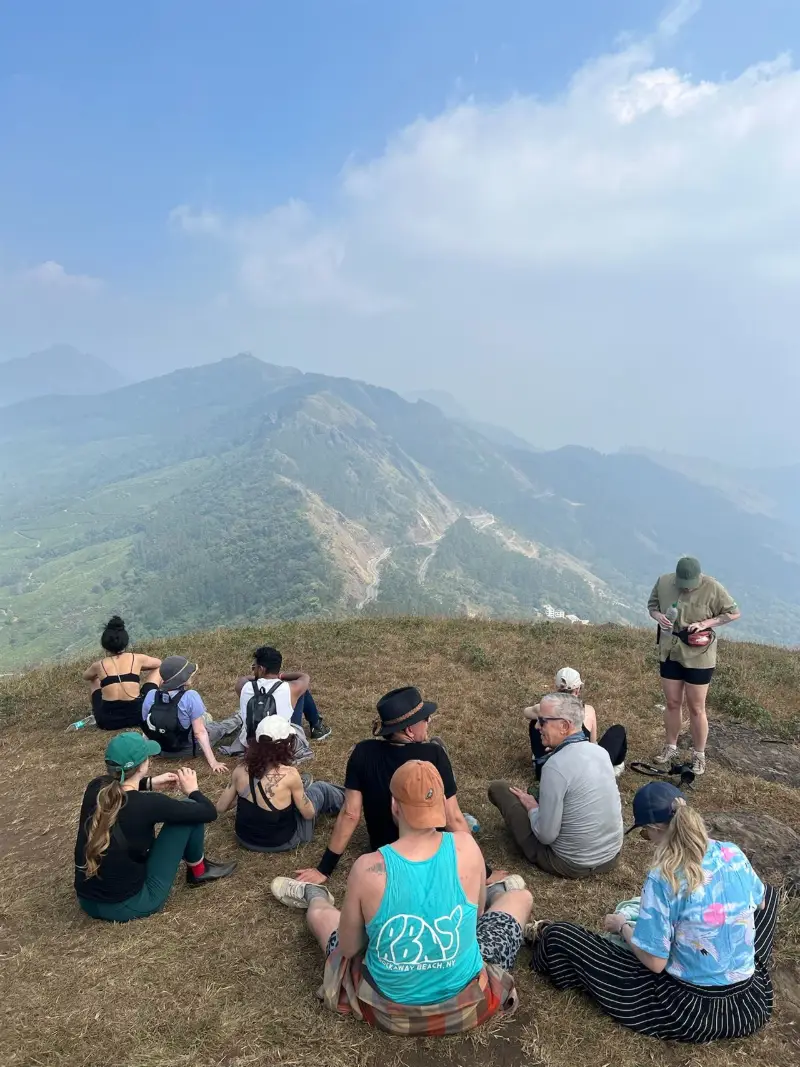
In short
To start meditating, sit comfortably for ten minutes a day, at the same time, and rest your attention on the breath, returning gently each time the mind wanders. To learn with guidance in Kochi, join a yoga class that includes breathing and stillness, take a workshop or structured course, or, for real depth, a residential Vipassana course in Kerala.
Many people come to meditation sideways. They join a yoga class for their back or their flexibility, and discover that the part they remember afterwards is the stillness at the end. Then they search "meditation Fort Kochi" and find surprisingly little.
Meditation is simpler to begin than most people think, and harder to keep up than they expect. This guide gives you a practice to start today and an honest map of where to learn more. If you want to try it inside a yoga class first, our guide to yoga in Fort Kochi has class times.
- Start with
- 10 minutes a day
- Best time
- Same time daily, often early
- Posture
- Any stable seat, including a chair
- Focus
- The breath
- Our meditation class
- Separate class; ask for timing
- For depth
- 10-day Vipassana, Kerala
Kinds of meditation you will come across
| Approach | What you do | Suits |
|---|---|---|
| Breath awareness | Rest attention on the natural breath | Almost everyone starting out |
| Mantra | Repeat a sound or word, such as Om, silently or aloud | Busy minds that need something to hold |
| Guided relaxation | Follow a voice through the body, as in yoga nidra | Stress, poor sleep, very new beginners |
| Candle gazing — trataka | Gaze steadily at a flame, then at its after-image with eyes closed | Concentration; a traditional Hatha practice |
| Vipassana | Observe bodily sensations with equanimity, usually learnt on a 10-day silent course | People ready for a serious commitment |
A ten-minute practice to start today
- Choose a time you can keep every day. Early morning, before the phone, is easiest for most people.
- Sit on something stable: a cushion on the floor, or a chair with your feet flat. The back upright but not stiff.
- Set a timer for ten minutes, so you are not checking the clock.
- Close your eyes and notice the breath where you feel it most clearly — at the nostrils or the belly.
- Count breaths from one to ten, then start again at one.
- When you lose count — and you will, constantly — notice that the mind wandered, and begin again at one. That return is the practice.
- Before opening your eyes, sit for a few breaths without counting.
Do this daily for two weeks before judging it. Ten minutes every day does more than an hour once a week.
Why yoga traditionally comes before meditation
In the yoga tradition, postures and breathing are not separate from meditation; they are preparation for it. Asana makes the body comfortable enough to sit still. Pranayama, breath control, steadies the nervous system — our beginner’s guide to pranayama teaches six practices. Only then does concentration — dharana — deepen into meditation, dhyana.
That is why many people find it easier to meditate at the end of a yoga class than on a cushion at home: the class has already done half the work. The Sun Salutation, practised slowly with the breath, is itself a moving meditation.
Common obstacles, and what helps
| Obstacle | What helps |
|---|---|
| “My mind won’t stop.” | It is not supposed to stop. Noticing and returning is the whole practice. |
| Sleepiness | Sit more upright, open the eyes slightly, meditate earlier in the day. |
| Back or knee pain when sitting | Sit higher, lean against a wall, or use a chair. Cross-legged is not required. |
| No time | Five minutes daily beats thirty minutes occasionally. |
| “Am I doing it right?” | If you sat and kept coming back, you did it right. |
Meditation helps many people feel calmer and more focused. It is not a substitute for medical care: if you are living with anxiety, depression or trauma, talk to a doctor or therapist, and let a meditation teacher know.
Where to learn in Kochi and Kerala
| Option | Format | Good for |
|---|---|---|
| A traditional yoga class | Breathing practice and a closing stillness within each class, such as ours in Fort Kochi | Trying it with no commitment |
| A dedicated meditation class | A separate class focused on meditation, such as ours in Fort Kochi, run when timing allows | Learning to sit, with a teacher in the room |
| Workshops and private sessions | Focused time on pranayama, mudras and meditation | Learning technique properly |
| Structured courses in Kochi | Multi-day programmes from larger organisations, such as The Art of Living | A guided start with a clear format |
| 10-day Vipassana course | Residential and silent, at Dhamma Ketana in Alappuzha district; no charge, run on donations | A serious, life-changing commitment |
| Apps and recordings | Self-guided, at home | Keeping a daily habit going |
Meditation in our classes
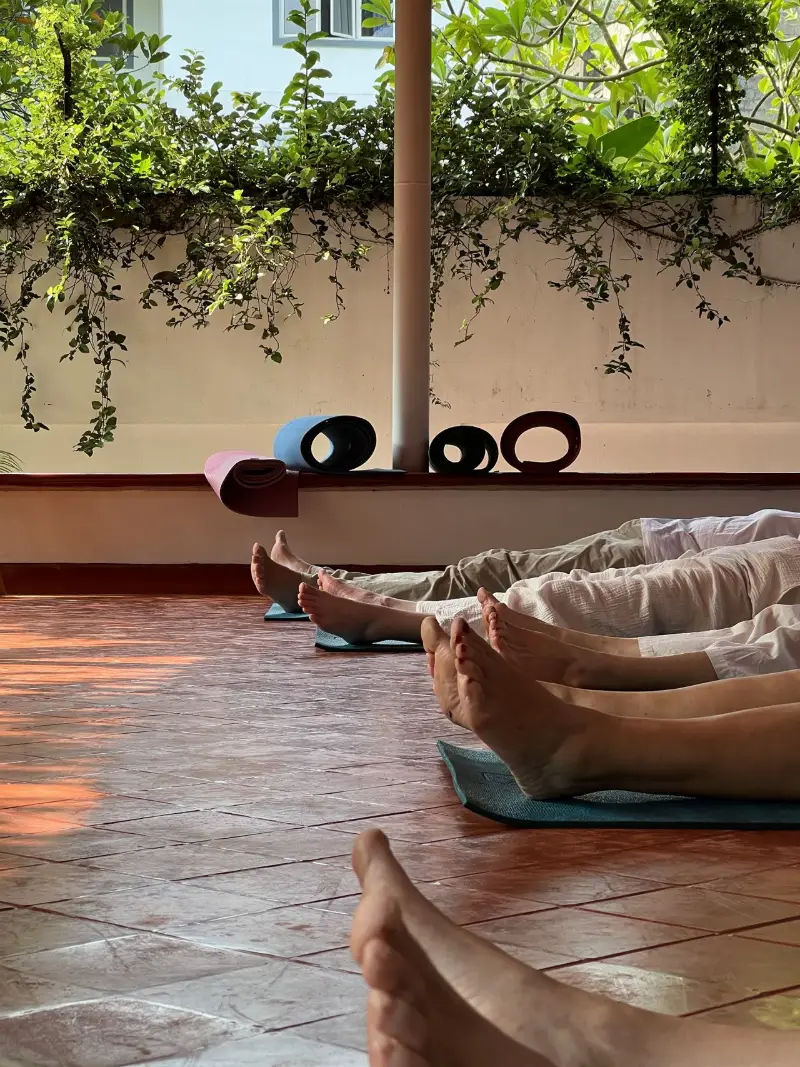
Every one of our classes in Fort Kochi includes conscious breathing and a closing stillness, taught in English to all levels, mornings 7:30–9:30 am and afternoons 3:30–5:30 pm. It is a gentle way to experience meditation with a teacher in the room.
We also run a separate meditation class. Its timing depends on the season and on availability, so message us to ask when the next one is. For more focused learning, we run workshops on pranayama and mudras, and private sessions can focus on the breath. If the philosophy behind the practice interests you, our guide to the Sivananda tradition explains the five points of yoga, in which meditation is one.
Practise with us in Fort Kochi
Traditional two-hour Hatha Yoga classes, mornings 7:30–9:30 am and afternoons 3:30–5:30 pm. All levels, no booking needed. Message us for the day’s schedule.
To begin at home, how to meditate every day sets out a simple method, and yoga for anxiety and stress covers the breathing that makes sitting easier.
Common questions
Are there meditation classes in Fort Kochi?
Yes. We run a separate meditation class in Fort Kochi; its timing depends on the season and availability, so message us to ask when the next one is. Our daily yoga classes also include breathing practice and a deep final relaxation.
How long should a beginner meditate?
Start with ten minutes a day, at the same time each day. Regularity matters more than length. Increase gradually once ten minutes feels settled.
Is Vipassana free in Kerala?
Yes. Dhamma Ketana, the main Vipassana centre in Kerala, in Alappuzha district, charges nothing for its 10-day courses, including food and accommodation. They are run entirely on donations from past students.
Do I need to sit cross-legged to meditate?
No. Any stable, upright seat works, including a chair with your feet flat on the floor. Comfort matters more than the shape of the legs.
What is the difference between meditation and pranayama?
Pranayama is the active regulation of the breath through specific techniques. Meditation is sustained, quiet attention. In the yoga tradition, pranayama is practised first because it steadies the mind for meditation.
Can meditation help with anxiety?
Many people find regular meditation helps them feel calmer. It is not a replacement for medical or psychological care, so anyone with an anxiety disorder should speak to a doctor or therapist, and tell their meditation teacher.

Known to his students as Achu, Aksharanand trained in the Sivananda tradition and holds an Advanced Teacher Training Certificate. He has taught Hatha Yoga, pranayama, meditation and Vedanta philosophy in Fort Kochi for over fifteen years, across more than 5,000 group classes.