
In short
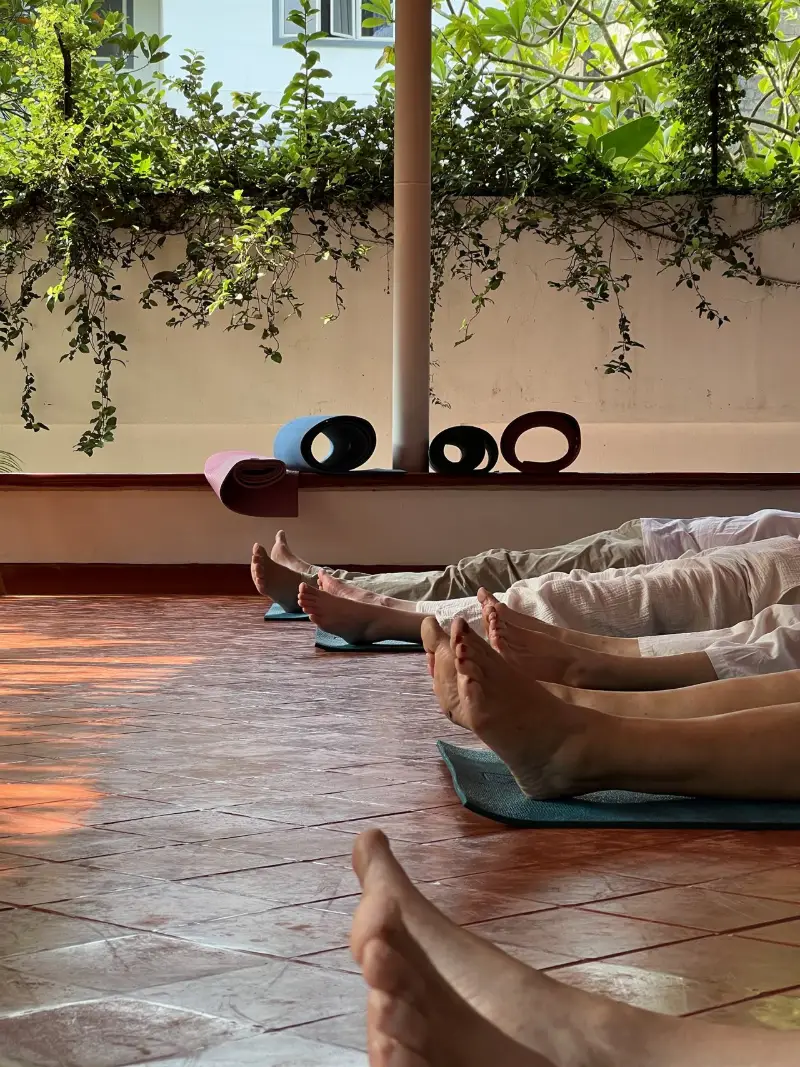
The eight mantras beginners meet most often are Om; Om Shanti Shanti Shanti; Asato Ma Sadgamaya; Om Saha Navavatu; Lokah Samastah Sukhino Bhavantu; Om Namah Shivaya; the Mahamrityunjaya mantra; and the Gayatri mantra. Most come from the Vedas and Upanishads. Each is a prayer for peace, clarity or protection, and none of them needs to be believed to be chanted. Chanting is always optional in a yoga class.
A mantra is a sound, word or verse repeated to steady the mind. The word is usually explained as manas, mind, and tra, instrument: a tool for the mind. It belongs to the same family of practice as japa with a mala and the chanting of Om.
Below are the eight you are most likely to hear in a traditional Hatha or Sivananda-style class in India, written in a simple transliteration you can read aloud.
The eight at a glance
| Mantra | Source | In one line |
|---|---|---|
| Om | Upanishads | The sound of the whole of existence |
| Om Shanti Shanti Shanti | Close of many Upanishads | Peace, three times over |
| Asato Ma Sadgamaya | Brihadaranyaka Upanishad | Lead me from the unreal to the real |
| Om Saha Navavatu | Taittiriya and Katha Upanishads | A prayer for teacher and student |
| Lokah Samastah Sukhino Bhavantu | Traditional prayer | May all beings everywhere be happy |
| Om Namah Shivaya | Yajurveda, Shaiva tradition | I bow to Shiva, the inner self |
| Mahamrityunjaya | Rig Veda 7.59.12 | A prayer for freedom from fear and death |
| Gayatri | Rig Veda 3.62.10 | May the light of the sun illumine our minds |
1. Om
The shortest and most important. Chanted slowly it becomes three sounds, A, U and M, followed by silence. It opens and closes most traditional practice, and nearly every other mantra starts with it.
Breathe in fully, then let the sound run the length of the exhale: a long open "o" and a humming "mmm" for about the last third. There is a full explanation in what Om means.
2. Om Shanti Shanti Shanti
Shanti means peace. It is said three times for peace from three kinds of disturbance: from within ourselves, from other beings, and from forces beyond our control. We have written about it in detail in why peace is said three times.
Our school is named for this word. Santhi is the Malayalam spelling of the same Sanskrit shanti.
3. Asato Ma Sadgamaya
Om asato ma sad gamaya
tamaso ma jyotir gamaya
mrityor ma amritam gamaya
Om shanti shanti shanti
"Lead me from the unreal to the real, from darkness to light, from death to immortality." It comes from the Brihadaranyaka Upanishad, one of the oldest, and it is the clearest one-verse summary of what Vedanta is asking for.
4. Om Saha Navavatu
Om saha navavatu, saha nau bhunaktu
saha viryam karavavahai
tejasvi navadhitam astu, ma vidvishavahai
Om shanti shanti shanti
"May we be protected together, nourished together. May we work together with energy. May our study be bright, and may there be no ill will between us." The nau, "us two", is teacher and student. It is chanted before study, which is why you hear it at the start of philosophy classes and on many teacher trainings.
5. Lokah Samastah Sukhino Bhavantu
Om lokah samastah sukhino bhavantu
"May all beings in all worlds be happy." Lokah is worlds, samastah all, sukhino happy and free from suffering, bhavantu may they be. It is a closing prayer that turns a personal practice outward, and it is the easiest of the eight to learn in one class.
6. Om Namah Shivaya
"I bow to Shiva." In the Shaiva tradition Shiva stands for the unchanging consciousness behind everything, so the mantra is also read as bowing to one's own deepest self. Its five syllables, na-mah-shi-va-ya, make it a natural mantra for silent repetition in meditation.
7. The Mahamrityunjaya mantra
Om tryambakam yajamahe
sugandhim pushti-vardhanam
urvarukam iva bandhanan
mrityor mukshiya mamritat
"We worship the three-eyed one, fragrant, who nourishes all. As a ripe cucumber is freed from the vine, may we be freed from death, and not from immortality." The image is lovely: the fruit falls when it is ready, without being torn. In India it is chanted for healing and in times of illness.
8. The Gayatri mantra
Om bhur bhuvah svah
tat savitur varenyam
bhargo devasya dhimahi
dhiyo yo nah prachodayat
"We meditate on the radiant light of the sun, the source of all; may it inspire our understanding." It is one of the most revered verses of the Rig Veda. Some traditional families and lineages still treat it as a mantra received from a teacher rather than read from a page, so listen to it first, and ask before chanting it in a temple setting.
How to chant, if you have never done it
- Sit comfortably with the spine upright. Our guide to sitting for meditation helps if your knees complain.
- Listen first. Hear a mantra three or four times before joining in; the rhythm teaches itself.
- Use the whole exhale. Chanting is breath practice. Let the sound carry the breath out slowly, like bhramari.
- Do not worry about accent. Sanskrit pronunciation matters to scholars; to a teacher in the room, a sincere attempt is enough.
- Stay with one. One mantra repeated for five minutes does more than eight chanted once.
Do I have to be Hindu to chant them?
No. These verses come from Hindu scripture, and it is right to treat them with respect. But they ask for peace, light and kindness, and people of every faith and none chant them in classes here every week. Chanting is offered, never required. If you would rather sit quietly while others chant, that is part of the practice too. There is more on this in is yoga a religion?
If you would like to hear them chanted in person, the opening and closing of our daily Hatha classes in Fort Kochi is a gentle place to start.
Common questions
What is the most powerful yoga mantra?
Tradition gives that place to Om, the sound most other mantras begin with, and to the Gayatri mantra among longer verses. In practice the most useful mantra is the one you will repeat every day.
What mantra is chanted at the end of a yoga class?
Most often Om Shanti Shanti Shanti, Lokah Samastah Sukhino Bhavantu, or Asato Ma Sadgamaya. All three are short prayers for peace.
What does Lokah Samastah Sukhino Bhavantu mean?
May all beings in all worlds be happy and free. It is a closing prayer that extends the calm of practice outward to everyone.
Can I chant mantras silently?
Yes. Silent repetition, called manasika japa, is considered the most refined form. Beginners usually find chanting aloud easier to start with because the breath keeps the rhythm.
Do I need to pronounce Sanskrit perfectly?
No. Learn it by ear from a teacher and do your best. Precision comes with time, and sincerity matters more in a class.
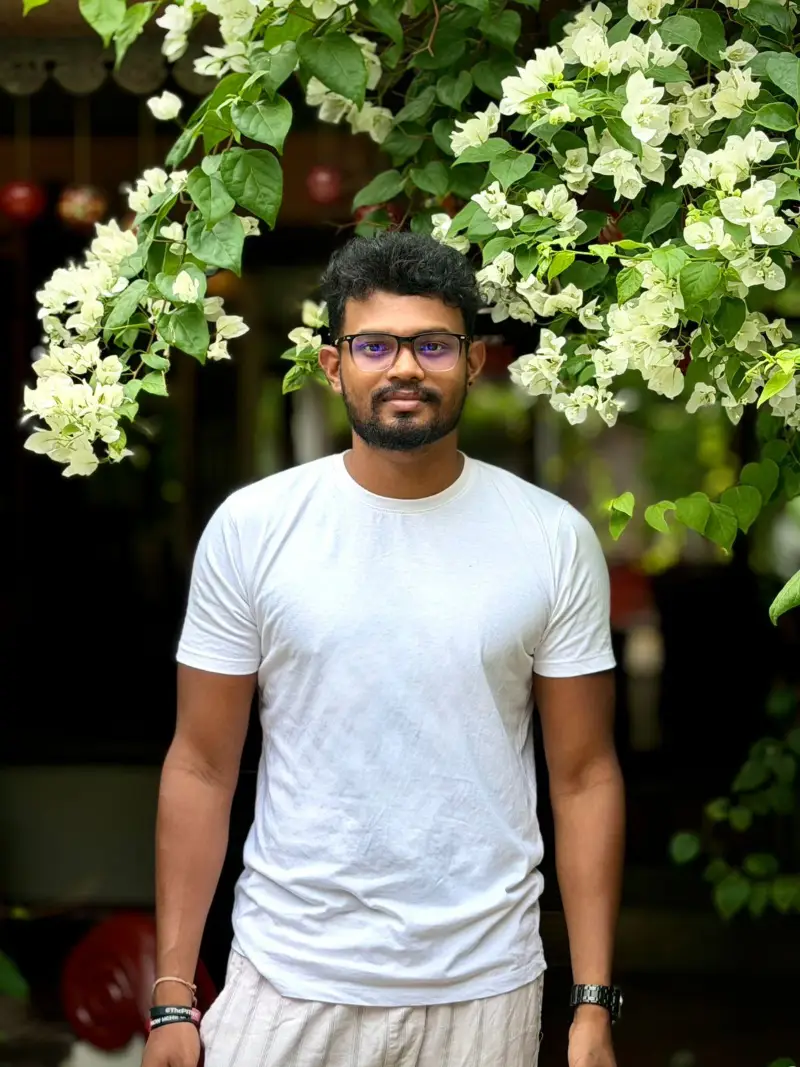
Known to his students as Achu, Aksharanand trained in the Sivananda tradition and holds an Advanced Teacher Training Certificate. He has taught Hatha Yoga, pranayama, meditation and Vedanta philosophy in Fort Kochi for over fifteen years, across more than 5,000 group classes and seventy international teacher training batches.
More about Achu and the school · Book a class or ask a question