
In short
You can start yoga at any age. Over fifty, the practice needs adapting rather than avoiding: use props, bend the knees, move more slowly, and give more time to balance, standing strength and breathing, which matter most as the body ages. Tell the teacher about any joint replacement, osteoporosis, high blood pressure or heart condition before the first class. Short, frequent practice is better than occasional long sessions.
There is a particular sentence we hear at the start of a first class, usually from someone who has booked a long trip to Kerala after retiring: I should have started years ago.
Perhaps. But you are starting now, and the body you have now responds to practice perfectly well.
It is not late
Traditional Hatha yoga was never designed for the young and flexible. It was designed as a lifelong practice, and many of its most committed practitioners came to it in middle age. What changes as we age is not whether yoga works but which parts of it do the most good.
And there is an advantage. People who start later are usually far more patient than twenty-year-olds, far less interested in how a posture looks, and far better at listening to their bodies. Those turn out to be most of the skills that matter.
What is different now
- Recovery is slower. Soreness lasts a little longer, so the first weeks need more space between harder sessions.
- Balance declines quietly. Most people do not notice until they have to, which is exactly why it is worth training.
- Joints have history. Old injuries, arthritis and replacements shape what is comfortable.
- Bone density may be lower, especially after menopause, which changes how some postures should be done.
None of this is a reason not to practise. It is a reason to practise intelligently.
What matters most
Balance. Standing on one leg, even holding a wall, is one of the most valuable things you can practise at any age after fifty. Tree pose, done near a wall, is a good place to start.
Standing strength. Warrior, chair and the standing postures load the legs and hips in a way that supports bone and makes stairs and getting up from the floor easier.
Breathing. Gentle pranayama helps the lungs, the nervous system and sleep at every age, and it needs no flexibility at all.
Relaxation. The long rest at the end of a class is where many older students say the real change happens. There is a full method in savasana is a skill.
Getting down and up from the floor. This is an under-rated measure of physical independence, and every class practises it without calling it anything.
How to adapt the postures
- Use props freely. A block under the hand, a folded blanket under the knees, a strap around the feet. They are tools, not crutches.
- Bend the knees in every forward bend. The hamstrings will lengthen over time. The lower back does not need to be sacrificed in the meantime.
- Use a wall or chair for balance postures.
- Move slowly into and out of postures. The transitions are where people get hurt, not the postures.
- Skip or adapt the inversions until a teacher has seen you. Legs up the wall gives much of the benefit of shoulderstand with none of the load.
- Stop before strain. A stretch should feel like a stretch, never like a sharp or joint-deep pain.
What to tell your teacher
Before your first class, mention:
- Hip or knee replacement. Some movements are restricted for a period after surgery or permanently; your surgeon's guidance comes first.
- Osteoporosis or osteopenia. Deep, loaded forward bends and strong twists usually need modifying.
- High blood pressure, heart conditions or glaucoma. These affect inversions and some breathing practices.
- Back or neck problems, and anything recent.
- Medication that affects balance or blood pressure.
A good teacher will not be alarmed by any of this. They will simply give you a different version. It is much easier in a small class, where the teacher can actually see you.
If you have a significant condition, check with your doctor before starting. Most will encourage it.
How to begin
Two or three short sessions a week for the first month, then build towards most days. Twenty minutes is plenty to start. There is more on rhythm in how often should you do yoga, and a gentle home routine in a 20-minute routine for beginners.
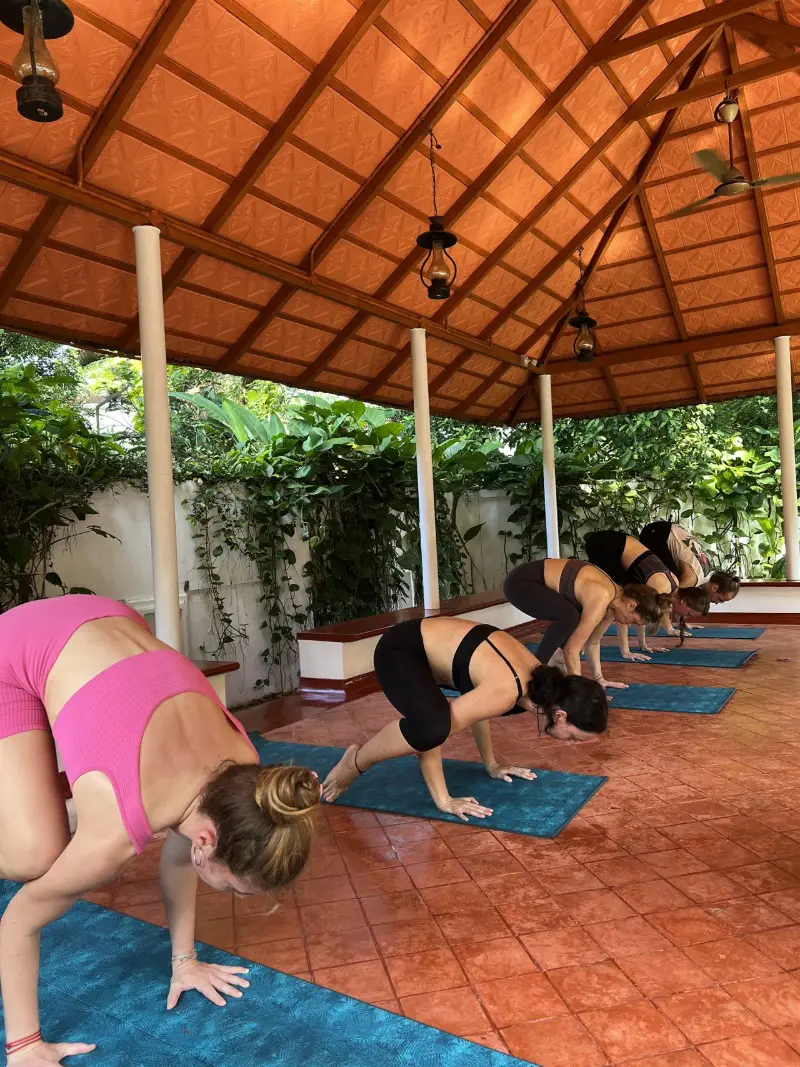
If you are in Fort Kochi, the daily classes are mixed-level and two hours long, with plenty of rest built in. Tell the teacher what you are working with and you will be given a version of each posture that suits you. Class times are here, and a private session first is a sensible way in if you have a particular condition.
Common questions
Is it too late to start yoga at 50 or 60?
No. Traditional yoga was designed as a lifelong practice, and many people begin in middle age or later. The practice needs adapting — props, bent knees, slower transitions — rather than avoiding.
What type of yoga is best for older beginners?
A slow, traditional Hatha class with real attention to alignment, time for breathing and a long relaxation. Avoid fast or heated classes at first, and choose a small class where the teacher can see you.
Is yoga safe with osteoporosis?
Generally yes, with changes. Standing and balance postures are helpful, while deep loaded forward bends and strong twists usually need modifying. Tell your teacher, and ask your doctor if your condition is significant.
Can I do yoga after a hip or knee replacement?
Usually, once your surgeon has cleared you, with some movements restricted for a period or permanently. Tell the teacher about the replacement before the first class so they can adapt the postures.

Known to his students as Achu, Aksharanand trained in the Sivananda tradition and holds an Advanced Teacher Training Certificate. He has taught Hatha Yoga, pranayama, meditation and Vedanta philosophy in Fort Kochi for over fifteen years, across more than 5,000 group classes and seventy international teacher training batches.
More about Achu and the school · Book a class or ask a question