
In short
Practise shoulderstand on two or three folded blankets, with the shoulders on the blankets and the head on the floor, so the neck keeps its natural curve. Lie down, lift the legs over the head, support the back with the hands, walk the hands down towards the shoulder blades and straighten the body upwards. Keep the head still and the elbows shoulder-width apart. Follow it with plough and fish. Skip it with a neck injury, uncontrolled high blood pressure, glaucoma or during pregnancy.
Swami Sivananda called shoulderstand sarvangasana, the all-limbs posture, because it involves the whole body. In the classical sequence it is the second posture, straight after headstand, and many teachers would say it matters more.
It is also the posture students most often do in a way that hurts them later. Almost all of that comes down to one thing.
The neck problem
In shoulderstand, the body rises vertically from the shoulders. Done flat on a mat, that folds the neck forward to roughly ninety degrees with a good part of your body weight on it. The neck is not built for that.
The fix is simple, and it is not optional: lift the shoulders, not the head. Once the shoulders are raised on a stack of blankets and the head rests lower on the floor, the neck keeps some of its natural curve and the weight goes where it should, into the shoulders and upper arms.
The blanket set-up
- Fold two or three firm blankets into neat rectangles and stack them, about five to eight centimetres high.
- Lie down so the shoulders are on the blankets, about five centimetres from the edge, and the head is on the floor off the edge.
- Check the back of the neck. It should hang in the gap, not press into the floor.
A mat folded on top of the blankets helps the elbows grip. That is the whole set-up, and it changes the posture completely.
Step by step
- Lie on your back on the set-up, legs together, arms beside you, palms down.
- Breathe in and lift the legs to vertical, using the abdomen rather than momentum.
- Breathe out and bring the legs over the head, lifting the hips off the floor.
- Bend the elbows and place the hands on the back, fingers pointing up the spine.
- Walk the hands down towards the shoulder blades and draw the elbows in towards shoulder-width. The closer the hands, the straighter the body.
- Straighten the legs upwards, one line from shoulders to feet. Chin towards the chest but not jammed into it.
- Breathe slowly into the belly. Do not turn the head. If you need to look anywhere, look at your feet.
Start with thirty seconds and build over weeks. Three minutes is a solid practice. To come down, lower the legs over the head, place the arms flat on the floor, and roll down one vertebra at a time.
Plough and fish
Shoulderstand is never practised alone.
Plough — halasana follows straight on: from shoulderstand, lower the feet to the floor behind the head. If they do not reach, rest them on a chair or keep them in the air. Keep the weight on the shoulders, not the neck.
Fish — matsyasana is the counterpose. Lie on the back, hands under the thighs, press on the forearms and lift the chest, letting the head tilt back until the crown rests lightly on the floor. The neck bent forward for several minutes now bends back. Hold fish for about half as long as the shoulderstand.
Easier versions
Legs up the wall. Lie with the hips close to a wall and the legs resting up it. Almost all of the calming effect, none of the load, and fine for anybody.
Half shoulderstand — viparita karani. Lift the hips and support them with the hands, but let the legs angle back over the face instead of straight up. Much less weight on the shoulders, and a good step towards the full posture.
Shoulderstand at the wall. Lie with the buttocks against the wall, walk the feet up it, lift the hips and support the back. The wall takes some of the work while you learn the alignment.
Who should not do it
Skip full shoulderstand and plough with any neck injury or ongoing neck pain, uncontrolled high blood pressure, glaucoma or other eye problems affected by pressure, a detached retina, or a heart condition. Avoid it in pregnancy unless it was already an established practice and your doctor agrees. Many traditions also advise against inversions during menstruation. If you are unsure, ask a doctor first. Legs up the wall is almost always fine.
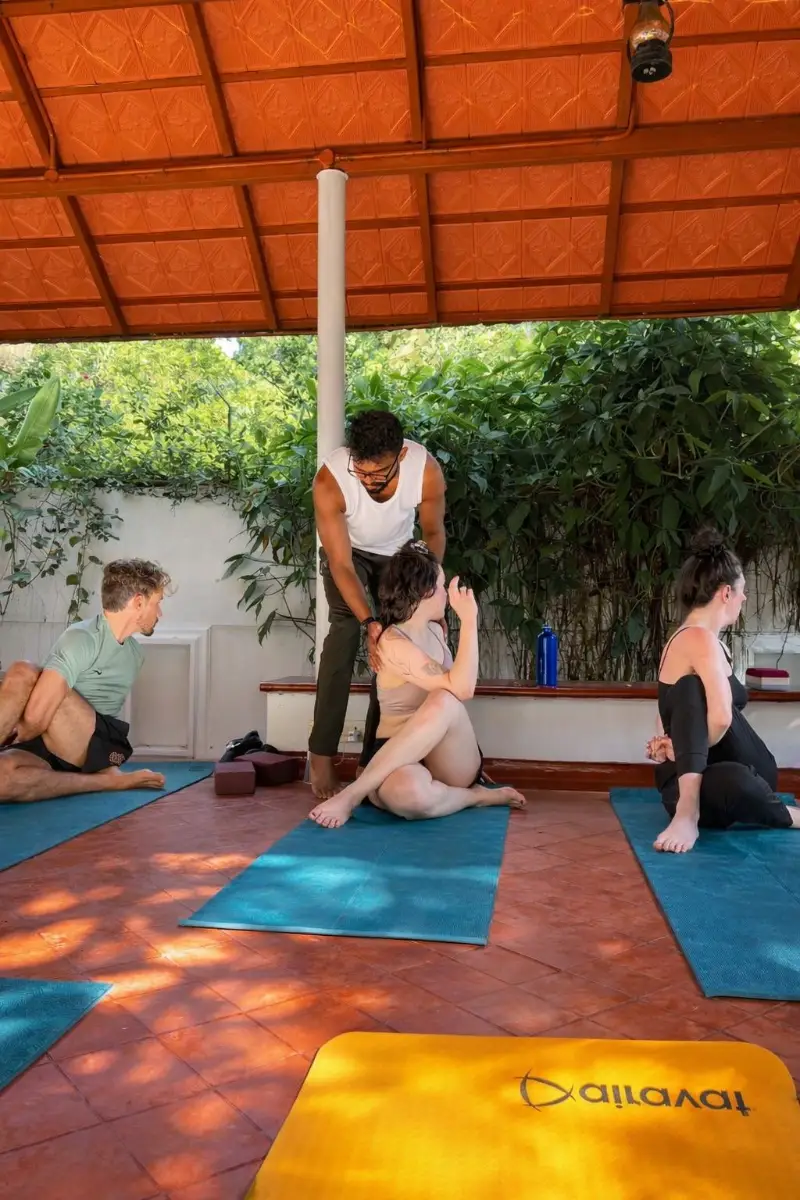
If your neck is sore from desk work, sort that out first. Yoga for neck and shoulder pain has the sequence. Then come back to this with blankets and patience. This is a posture worth having for life, and the set-up is what makes that possible. In Fort Kochi, it is taught in the daily classes with hands-on correction.
Common questions
Is shoulderstand bad for your neck?
It can be if done flat on a mat, because the neck folds forward under much of your body weight. Practised on two or three folded blankets with the shoulders raised and the head on the floor, the neck keeps its curve and the weight goes into the shoulders.
How long should I hold shoulderstand?
Start with thirty seconds and build over several weeks. Around three minutes is a solid regular practice. Follow it with plough and then fish, holding fish for about half as long.
What is the counterpose to shoulderstand?
Fish pose, matsyasana. Shoulderstand and plough bend the neck forward; fish lifts the chest and gently bends it back, balancing the effect.
What can I do instead of shoulderstand?
Legs up the wall gives most of the calming effect with no load on the neck. Half shoulderstand, with the legs angled back over the face, is a good step towards the full posture.

Known to his students as Achu, Aksharanand trained in the Sivananda tradition and holds an Advanced Teacher Training Certificate. He has taught Hatha Yoga, pranayama, meditation and Vedanta philosophy in Fort Kochi for over fifteen years, across more than 5,000 group classes and seventy international teacher training batches.
More about Achu and the school · Book a class or ask a question