
In short
The Cochin Carnival is Fort Kochi’s New Year festival, held every year in the second half of December. It ends at midnight on 31 December with the burning of the Pappanji, a giant effigy of an old man that stands for the passing year, on the Parade Ground. Expect huge crowds, road closures and packed ferries on New Year’s Eve. Book your stay early, get around on foot, and arrive at the Parade Ground well before midnight.
Fort Kochi is a quiet town for most of the year. In the last fortnight of December it is anything but. Streets are strung with lights, stages go up on the grounds, and by New Year’s Eve it can feel as though half of Kerala has come to the seafront.
We have lived through a great many of these New Years. It is a wonderful thing to see once, and it helps enormously to know how it works before you arrive.
What the Cochin Carnival is
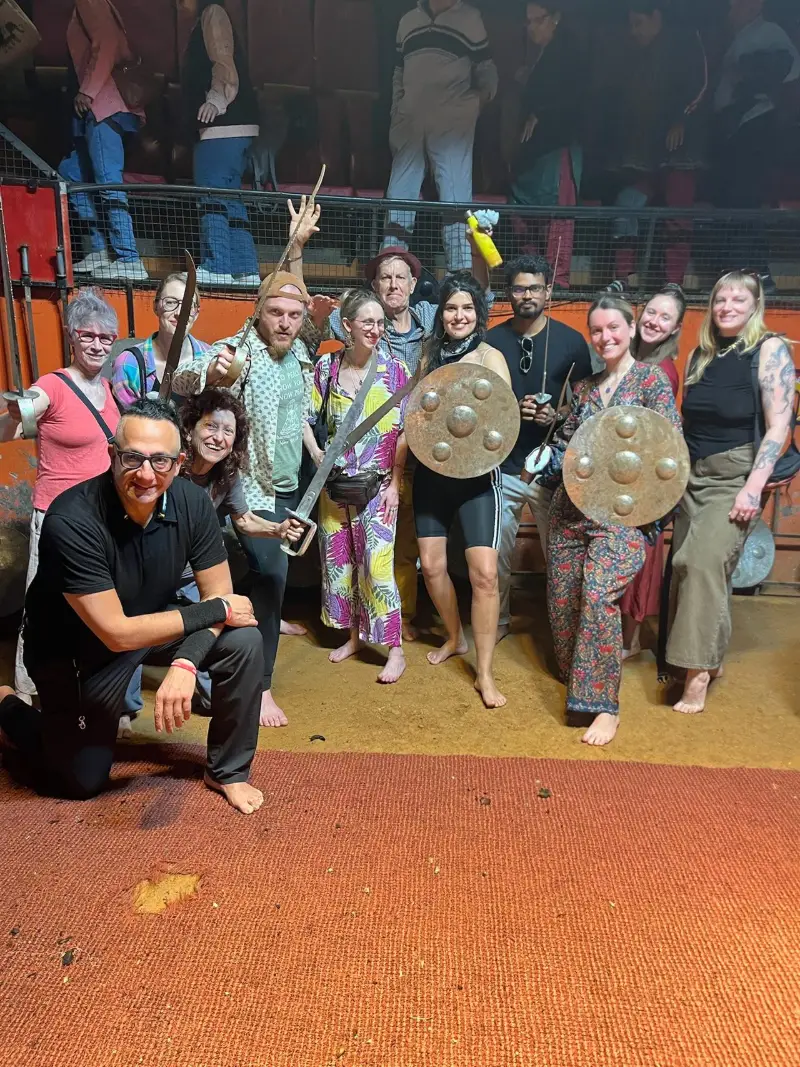
The Cochin Carnival began in the mid-1980s and has grown into one of Kerala’s best-known New Year celebrations. It is run largely by local clubs and volunteers, and it is a community festival first and a tourist event second.
Over roughly two weeks, the programme usually includes:
- cultural programmes and music on open-air stages,
- sports on the beach and grounds, from football to boat and cycle races,
- food stalls and flea markets,
- competitions for local children and families,
- a large street procession with floats, costumes and bands.
In recent years it has opened around the middle of December with a ceremony for peace at St. Francis Church, and the whole thing builds towards New Year’s Eve.
The burning of the Pappanji
The heart of the carnival is the Pappanji, a huge effigy of an old man in a suit and hat, built by local artists and set up on the Parade Ground in the days before New Year. He represents the old year: its troubles, its failures, everything worth leaving behind.
At the stroke of midnight on 31 December, the Pappanji is set alight, to a roar from the crowd and fireworks over the sea. It is a loud, joyful, slightly chaotic moment, and the reason tens of thousands of people come.
In recent years more than one Pappanji has been built, with another sometimes burned at Veli Ground, so check the year’s plans when you arrive.
Dates for this year
The carnival follows the same pattern every year: it begins around mid-December and ends in the early hours of 1 January. The organisers announce the exact programme each year, usually in late November or early December. Check the Cochin Carnival’s own announcements or Kerala Tourism’s events page for the current dates.
Crowds, closures and getting around
This is the part that matters most for a comfortable New Year.
- Book accommodation early. Rooms for the last week of December in Fort Kochi can fill months ahead, and prices rise.
- Expect road closures. On New Year’s Eve, the police usually restrict vehicles into Fort Kochi from the evening. Plan to be in town by the afternoon and to get around on foot.
- Ferries and the Water Metro will be packed. If you are staying in Ernakulam, cross early and expect long queues coming back after midnight. Our Ernakulam to Fort Kochi guide has the options.
- Arrive at the Parade Ground early. The ground fills well before midnight. Agree a meeting point with friends in case you are separated; phone networks can struggle.
- Mind your belongings. Any crowd this size attracts pickpockets. Carry little.
Enjoying it calmly
You do not have to be in the thick of the crowd to enjoy the carnival.
- See the Pappanji by day. In the days before New Year he stands on the Parade Ground, and you can see him up close without the crush.
- Come for the earlier events. The cultural programmes and markets in the week before are far calmer than New Year’s Eve itself.
- Watch from the edges. The burning and the fireworks can be seen from around the ground and along the front without being in the middle.
- Families and solo travellers: the early evening is lively and sociable. The hour around midnight is the most crowded; decide in advance how close you want to be.
A quieter first morning
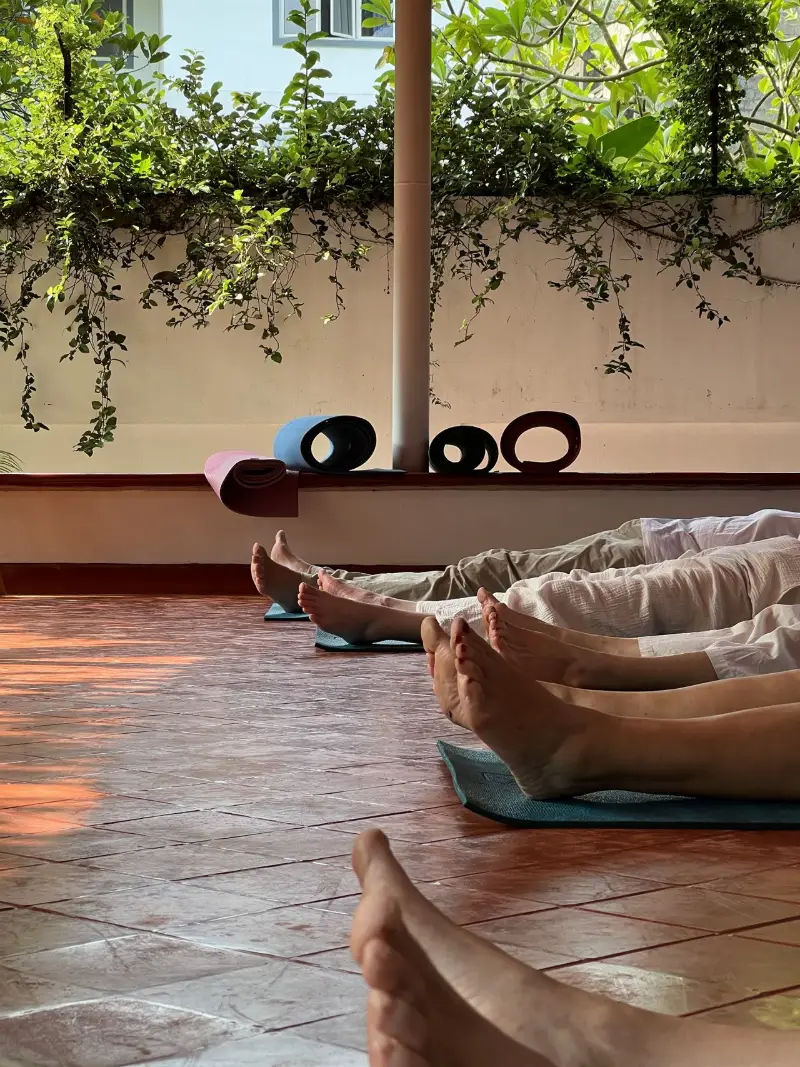
After the noise of New Year’s Eve, the town is very quiet on the morning of 1 January. It is one of the loveliest mornings of the year to be in Fort Kochi: empty streets, cool air, the smell of the bonfire still drifting from the Parade Ground.
Our classes run every day of the year, with no day off. A slow two-hour Hatha class, with a long rest at the end, is a good way to begin the new year on purpose rather than by accident. If you are awake, you are welcome, but do message us the evening before a morning class, as usual, so we can tell you where to come.
In the busy fortnight around Christmas and New Year, it also helps to message us before coming to any class, so we know how many to expect.
Begin the year on a mat
Traditional Hatha Yoga every day, 7:30–9:30 am or 3:30–5:30 pm. ₹500 a class (a limited-time offer; normally ₹600, and ₹700 from November 2026). No booking and no experience needed; mats provided. Message us the evening before a morning class.
Visiting in the season? The best time to visit Kerala for yoga goes through the year month by month, and things to do in Fort Kochi covers the rest of the town.
Common questions
When is the Cochin Carnival?
Every year in the second half of December, starting around the middle of the month and ending in the early hours of 1 January. The exact programme is announced each year by the organisers.
What is the Pappanji?
A giant effigy of an old man that represents the passing year. It is built by local artists, set up on the Parade Ground in Fort Kochi, and burned at midnight on New Year’s Eve.
Where is the Pappanji burned?
At the Parade Ground in Fort Kochi. In some recent years a second Pappanji has also been burned at Veli Ground.
Can you drive into Fort Kochi on New Year’s Eve?
Usually not easily. Police normally restrict vehicles into Fort Kochi from the evening of 31 December. Arrive in the afternoon and get around on foot.
Are yoga classes held on 1 January in Fort Kochi?
Yes. Santhi School of Yoga holds classes every day of the year, at 7:30 am and 3:30 pm. Message the school the evening before a morning class to confirm where it will be held.

Known to his students as Achu, Aksharanand trained in the Sivananda tradition and holds an Advanced Teacher Training Certificate. He has taught Hatha Yoga, pranayama, meditation and Vedanta philosophy in Fort Kochi for over fifteen years, across more than 5,000 group classes and seventy international teacher training batches.
More about Achu and the school · Book a class or ask a question